












Skip to content
  • Categories
  • Recent
  • Tags
  • Popular
  • World
  • Users
  • Groups
Collapse
Brand Logo
UDS UDS: $1.1776
24h: 0.60%
Trade UDS
Gate.io
Gate.io
UDS / USDT
KuCoin
KuCoin
UDS / USDT
MEXC
MEXC
UDS / USDT
BingX
BingX
UDS / USDT
BitMart
BitMart
UDS / USDT
LBank
LBank
UDS / USDT
XT.COM
XT.COM
UDS / USDT
Uniswap v3
Uniswap v3
UDS / USDT
Biconomy.com
Biconomy.com
UDS / USDT
WEEX
WEEX
UDS / USDT
PancakeSwap v3
PancakeSwap v3
UDS / USDT
Pionex
Pionex
UDS / USDT
COINSTORE
COINSTORE
UDS / USDT
Sushiswap v3
Sushiswap v3
UDS / USDT
Picol
Picol
UDS / USDT

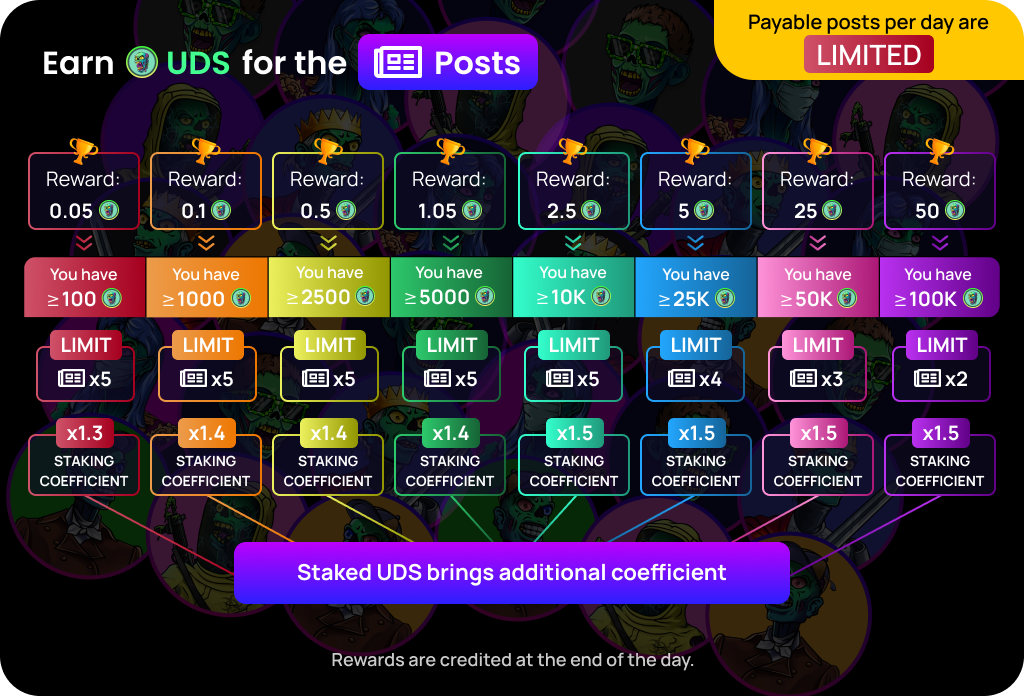
Earn up to 50 UDS per post

Post in Forum to earn rewards!

Learn more
UDS Right

Spin your Wheel of Fortune!

Earn or purchase spins to test your luck. Spin the Wheel of Fortune and win amazing prizes!

Spin now
Wheel of Fortune
selector
wheel
Spin

Paired Staking

Stake $UDS
APR icon Earn up to 50% APR
NFT icon Boost earnings with NFTs
Earn icon Play, HODL & earn more
Stake $UDS
Stake $UDS
UDS Left

Buy UDS!

Buy UDS with popular exchanges! Make purchases and claim rewards!

Buy UDS
UDS Right

INFLUENCER LEVEL

Based on the number of subscribers

MULTIPLIER

up to 10k

x1.1

10-25k

x1.25

25-100k

x1.5

100k-250k

x2

250k-1m

x3

1m+

x5

Post links to Undeads Forum messages or Undeads products to receive additional rewards

Post limits and staking coefficients applied similar to Forum posts

Discord, Telegram, Twiter

Post in Forum to earn rewards!

UDS Rewards
Jack MartinJ

Jack Martin

@Jack Martin
About
Posts
5
Topics
5
Shares
0
Groups
0
Followers
0
Following
0

Posts

Recent Best Controversial

  • How Do Decentralized Exchanges Make Money?
    Jack MartinJ Jack Martin

    Understanding the DEX Revenue Model

    Decentralized exchanges have become one of the fastest-growing sectors in the crypto industry. Unlike traditional exchanges, DEX platforms operate without intermediaries, allowing users to trade assets directly through smart contracts.

    But one question many founders ask is simple: how do decentralized exchanges actually make money?

    The answer lies in multiple revenue streams built into the platform ecosystem.

    Trading Fees Generate Consistent Revenue

    The primary source of income for most DEX platforms comes from trading fees. Every token swap or trade executed on the exchange includes a small fee percentage.

    As trading volume increases, platform revenue grows significantly. Popular DEX platforms processing millions in daily volume can generate substantial recurring income from transaction fees alone.

    Liquidity Pool Fees

    Liquidity providers play a major role in decentralized exchanges. When users add liquidity to pools, the platform rewards them with a percentage of trading fees.

    At the same time, the DEX platform itself also earns a portion of these fees, creating another stable revenue channel.

    Understanding the complete decentralized exchange software development structure is important because liquidity systems are the core engine behind modern AMM-based exchanges.

    Token Listing Charges

    Many DEX businesses charge projects to list their tokens on the platform. As the crypto market expands, token launches continue increasing, creating additional monetization opportunities for exchange owners.

    Some platforms also offer premium visibility or marketing support for newly listed tokens.

    Staking and Yield Farming Services

    Modern DEX platforms now include:

    Yield farming
    Staking rewards
    Governance systems
    Launchpads
    NFT integrations

    These features improve user retention while also generating platform revenue through service fees.

    Development Costs and Profitability

    Before launching a platform, founders usually research the DEX development cost involved in building secure and scalable infrastructure.

    Factors affecting pricing include:

    Blockchain selection
    Smart contract complexity
    Multi-chain support
    Wallet integration
    Security audits
    UI/UX customization

    A strong understanding of the DEX development process helps businesses optimize costs while building profitable long-term ecosystems.

    Final Thoughts

    Decentralized exchanges make money through a combination of trading activity, liquidity systems, token listings, and premium DeFi services. As Web3 adoption continues growing, DEX platforms are becoming powerful digital businesses with multiple scalable revenue streams.

    General Discussion

  • How Much Does Crypto Exchange Development Cost in 2026?
    Jack MartinJ Jack Martin

    The cryptocurrency market continues to grow rapidly in 2026, creating huge opportunities for startups and enterprises planning to launch their own trading platforms. As digital assets gain mainstream adoption, businesses are increasingly investing in crypto exchanges to generate revenue and expand their presence in the blockchain ecosystem.

    However, one of the most common questions entrepreneurs ask before entering the market is how much crypto exchange development actually costs.

    The answer depends on several factors, including platform complexity, security features, blockchain integration, liquidity systems, and the overall business model.

    Whether you plan to build a centralized exchange, decentralized exchange, or hybrid platform, understanding development costs helps businesses plan their budgets effectively and avoid unexpected expenses.

    Factors Affecting Crypto Exchange Development Cost

    Several important elements directly influence the total development budget of a cryptocurrency exchange platform.

    Exchange Type

    The type of exchange significantly impacts development pricing.

    Centralized exchanges generally require advanced backend infrastructure and security systems.
    Decentralized exchanges rely heavily on smart contracts and blockchain integration.

    Hybrid exchanges combine features from both models, increasing development complexity.
    Security Infrastructure

    Security is one of the biggest cost-driving factors in exchange development.

    Features such as:

    • Two-factor authentication
    • Cold wallet integration
    • Anti-DDoS protection
    • Multi-signature wallets
    • End-to-end encryption

    all require additional development and testing efforts.

    Businesses searching for the actual cost to build a crypto exchange must understand that enterprise-grade security is not optional in today’s crypto market.

    Trading Engine Development

    A high-performance trading engine increases platform reliability and transaction speed. Advanced trading features such as margin trading, futures trading, and AI-based analytics also affect development pricing.

    Liquidity Integration

    Liquidity is critical for smooth trading experiences. Many businesses integrate external liquidity providers to improve order execution and market stability.

    This integration can increase the overall development budget depending on platform requirements.

    Estimated Development Cost in 2026

    The estimated cost of building a crypto exchange platform varies based on business goals and technical complexity.

    • Basic Exchange Platform
    • Simple UI/UX
    • Limited trading pairs
    • Standard security features

    Mid-Level Exchange Platform

    • Advanced wallet integration
    • Real-time analytics
    • Enhanced security systems
    • Mobile application support

    Enterprise-Level Exchange

    • AI-powered trading tools
    • Multi-chain support
    • Institutional trading features
    • Advanced scalability infrastructure

    Why Businesses Use Cost Calculators

    Many startups now prefer using a free crypto exchange cost calculator before starting development. These tools help businesses estimate budgets based on selected features, exchange type, security requirements, and scalability goals.

    Cost calculators simplify project planning and help companies understand the financial scope of their exchange platform before hiring developers.

    Conclusion

    Crypto exchange development costs in 2026 depend heavily on platform complexity, security requirements, liquidity integration, and scalability needs. Businesses planning to enter the blockchain industry should carefully evaluate their goals and prioritize long-term growth while estimating development expenses.

    Using modern budgeting tools and consulting experienced development teams can help businesses launch secure, scalable, and profitable cryptocurrency trading platforms successfully.

    General Discussion

  • Blockchain Use Cases That Are Transforming Global Industries
    Jack MartinJ Jack Martin

    Blockchain development is transforming industries far beyond cryptocurrency and digital assets. In 2026, businesses worldwide are using blockchain technology to improve transparency, automate operations, secure transactions, and build decentralized ecosystems.

    From healthcare and logistics to finance and real estate, blockchain is becoming one of the strongest drivers of digital innovation.

    Blockchain in Finance

    Financial institutions are leveraging blockchain for secure and faster transactions.

    Popular blockchain finance use cases include:

    • Cross-border payments
    • Decentralized finance platforms
    • Digital wallets
    • Fraud prevention systems
    • Asset tokenization

    Many fintech businesses are now working with a custom blockchain application development company to build scalable financial ecosystems.

    Healthcare Data Management

    Healthcare organizations are using blockchain to protect patient records and improve medical data sharing.

    Benefits include:

    • Secure patient information
    • Transparent medical history tracking
    • Faster insurance processing
    • Pharmaceutical supply chain verification
    • Blockchain improves trust while reducing administrative inefficiencies.

    Supply Chain Transparency

    Supply chain businesses are integrating blockchain to improve logistics tracking and product verification.

    Key advantages:

    • Real-time shipment monitoring
    • Counterfeit prevention
    • Improved inventory tracking
    • Transparent product movement

    Blockchain-powered logistics systems are becoming essential for global supply chain operations.

    Real Estate Tokenization

    Blockchain is changing real estate investments through tokenization and smart contracts.

    Businesses are using blockchain for:

    • Fractional property ownership
    • Secure property transactions
    • Automated legal agreements
    • Digital ownership verification

    This is creating new opportunities for global investors.

    Final Thoughts

    Blockchain technology is transforming industries by improving transparency, security, and operational efficiency. Businesses investing in blockchain-based platform development are creating scalable digital ecosystems that support long-term innovation and growth.

    General Discussion

  • What’s Better: Build From Scratch or White Label?
    Jack MartinJ Jack Martin

    Many entrepreneurs entering the crypto industry face one important question: should they build a crypto exchange from scratch or choose white label crypto exchange development? Both approaches have advantages, but the right choice depends on budget, timeline, scalability, and business goals.

    Understanding Custom Exchange Development
    Building an exchange from scratch gives complete control over architecture, design, and features. Businesses can create unique functionalities tailored to their brand.

    However, custom development comes with several challenges:

    • High development costs
    • Longer launch timelines
    • Complex security implementation
    • Ongoing maintenance requirements
    • Larger development teams

    A fully custom exchange may take 12–18 months to launch successfully.

    Why White Label Solutions Are Becoming Popular
    Modern startups now prefer white label crypto exchange services because they reduce development time significantly. A professional white label crypto exchange development company already has a tested exchange framework that can be customized quickly.

    Businesses can easily Develop white label crypto trading platform solutions within weeks instead of months.

    Key Benefits of White Label Exchanges
    Faster Time to Market

    Speed matters in crypto. White label platforms help businesses launch quickly and capture market opportunities faster.

    Lower Development Costs

    Custom development requires large investments in blockchain engineers, cybersecurity experts, and infrastructure. White label solutions reduce those expenses dramatically.

    Built-In Security

    Most white label crypto exchange development providers include:

    • Multi-signature wallets
    • DDoS protection
    • Two-factor authentication
    • KYC/AML integration
    • Encrypted transactions
    • Scalability

    Modern white label exchanges support future upgrades and advanced trading features.

    When Building From Scratch Makes Sense

    Custom development may still be suitable for enterprises needing:

    • Unique trading algorithms
    • Proprietary infrastructure
    • Highly specialized financial products
    • Completely customized architecture

    Large enterprises with strong budgets often choose this route.

    Which Option Is Better for Startups?

    For most startups, white label crypto exchange development offers the best balance between affordability, speed, and scalability. Businesses can launch faster, test the market, and scale gradually.

    Choosing an experienced white label crypto exchange development company also ensures ongoing support, maintenance, and security updates.

    Final Verdict

    Both approaches have value, but for startups and growing businesses, white label crypto exchange services provide a faster and more cost-effective path to success. Companies looking to Develop white label crypto trading platform solutions can reduce operational risks while entering the competitive crypto market more efficiently.

    General Discussion

  • The Evolution of White Label Crypto Exchange Development
    Jack MartinJ Jack Martin

    The cryptocurrency industry has evolved dramatically over the last decade, and one of the biggest innovations driving this transformation is white label crypto exchange development.

    Businesses no longer need to spend years building complex trading infrastructure from scratch. Instead, they can launch scalable and feature-rich trading platforms using advanced white label crypto trading software.

    Today, startups, fintech companies, and blockchain enterprises are increasingly choosing secure white label crypto exchange solutions to enter the digital asset market quickly and cost-effectively.

    From Traditional Development to White Label Solutions

    Earlier, building a cryptocurrency exchange required massive investment in backend architecture, security systems, trading engines, and liquidity integration. This process was time-consuming and technically challenging.

    Modern white label crypto exchange platforms have simplified the entire development cycle. Businesses can now deploy ready-made trading infrastructure with features like:

    • Spot and futures trading
    • Liquidity APIs
    • Multi-currency wallets
    • KYC/AML verification
    • Advanced admin dashboards
    • AI-powered fraud monitoring

    This shift has made how to launch a white label crypto exchange one of the most searched topics in the blockchain industry.

    Rising Demand for Secure Trading Platforms

    Security is one of the biggest reasons behind the growth of secure white label crypto exchange solutions. Modern crypto traders expect enterprise-grade protection for their digital assets.

    Leading best white label crypto exchange provider companies now integrate:

    Cold wallet storage

    • Multi-signature authentication
    • Two-factor authentication
    • Anti-phishing systems
    • DDoS protection
    • Encrypted APIs

    These advanced features improve platform trust and attract both retail and institutional traders.

    Customization and Scalability

    Another major evolution in white label crypto trading software is customization. Businesses no longer want generic exchange platforms. They require branded ecosystems tailored to their target audience.

    Modern exchange solutions support:

    Custom UI/UX design

    • Multi-language support
    • Token listing systems
    • Mobile trading apps
    • Multi-chain integration
    • Fiat payment gateway support

    This flexibility makes white label crypto exchange development ideal for startups looking to scale globally.

    Future of White Label Exchange Development

    The future of white label cryptocurrency exchange development will focus heavily on AI automation, decentralized finance integration, and cross-chain trading infrastructure.

    As Web3 adoption increases, businesses using advanced white label crypto exchange solutions will gain a strong competitive advantage in the digital finance market.

    Companies searching for the best white label crypto exchange provider are now prioritizing scalability, compliance, liquidity access, and long-term ecosystem growth instead of just basic exchange deployment.

    General Discussion

  • Login or register to search.
Powered by NodeBB Contributors
  • First post
    Last post
0
  • Categories
  • Recent
  • Tags
  • Popular
  • World
  • Users
  • Groups