


















 Earn up to 50% APR
 Boost earnings with NFTs
 Play, HODL & earn more







Japan's Bond Market Is Under Historic Stress and the Ripple Effects Could Hit the Entire Global Financial System
-
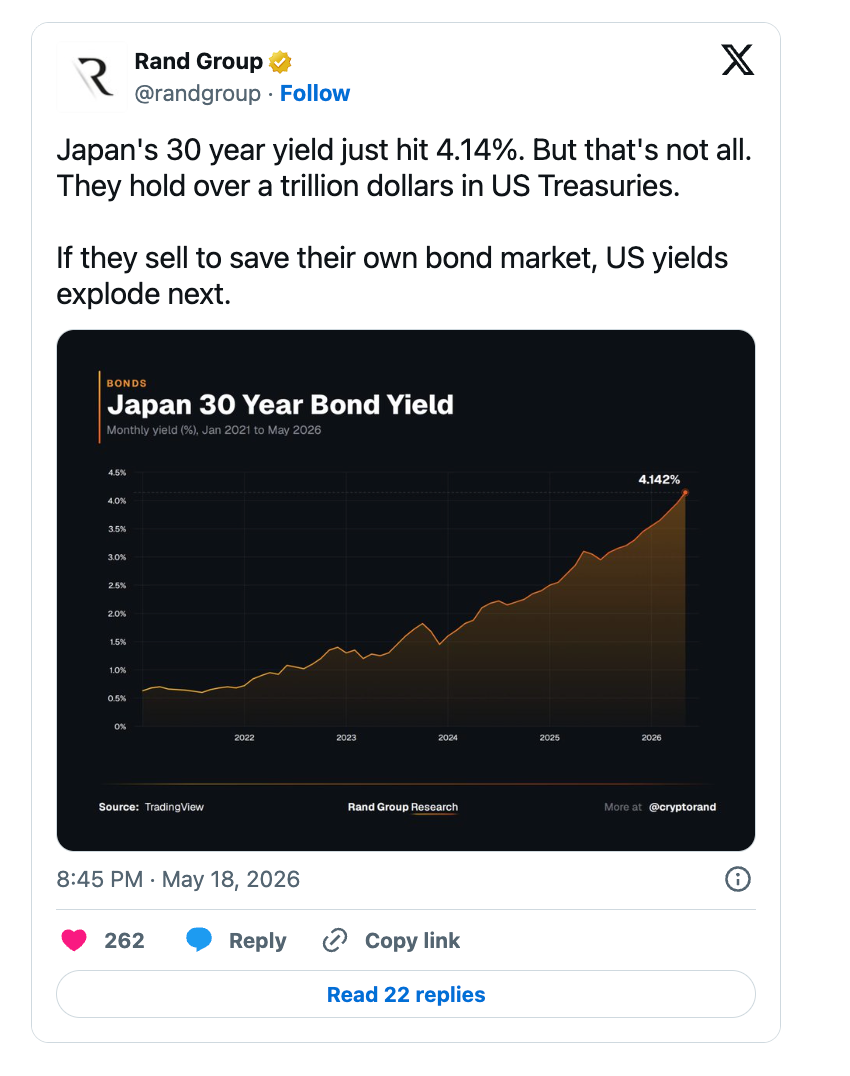
Japan's bond market is experiencing strain not seen in decades, with the 30-year Japanese government bond surpassing 4% for the first time since its creation in 1999 and the 10-year bond hovering near levels last seen in the late 1990s. The source of the pressure is the unwinding of the yen carry trade, a decades-long dynamic where Japan's ultra-low interest rates allowed investors to borrow cheap yen and deploy the proceeds into higher-yielding assets around the world. As the Bank of Japan raises rates, that massive global flow is reversing, forcing Japanese investors to repatriate capital and sell foreign assets. Japanese investors sold approximately $29.6 billion in US Treasury debt during the first quarter of 2026 alone, the largest quarterly sale recorded since 2022.The concern among analysts is that this is not a contained regional problem but a potential trigger for a global domino effect.
Japan is the largest foreign creditor of the United States, meaning large-scale Japanese selling of US Treasuries pushes American yields higher, which in turn makes mortgages more expensive, tightens credit conditions, and increases financial stress across the entire US economy. Analyst Catalina Castro drew widespread attention by laying out this chain reaction explicitly, noting that the 30-year US Treasury bond reached 5% in the same period. The stress on Japanese bonds is already becoming stress on American bonds, and if Japanese yield pressures continue to escalate or capital repatriation accelerates, the volatility rippling through global markets in the months ahead could intensify significantly.