


















 Earn up to 50% APR
 Boost earnings with NFTs
 Play, HODL & earn more






HYPE Surged 23% in 24 Hours to Its Highest Level Since October. Three Catalysts Drove It
-
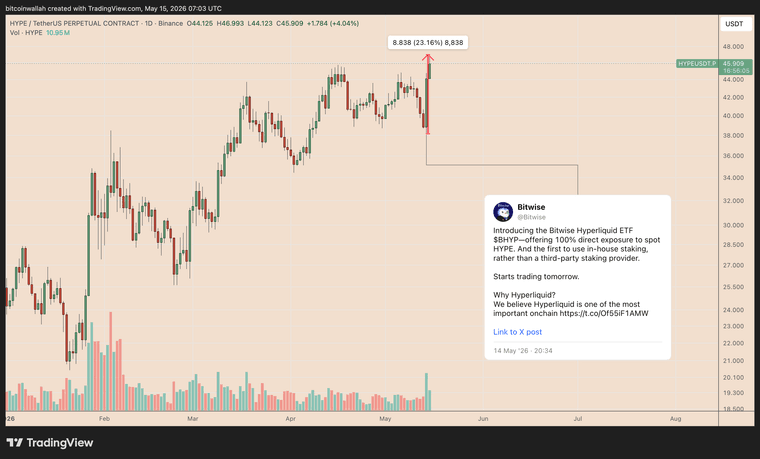
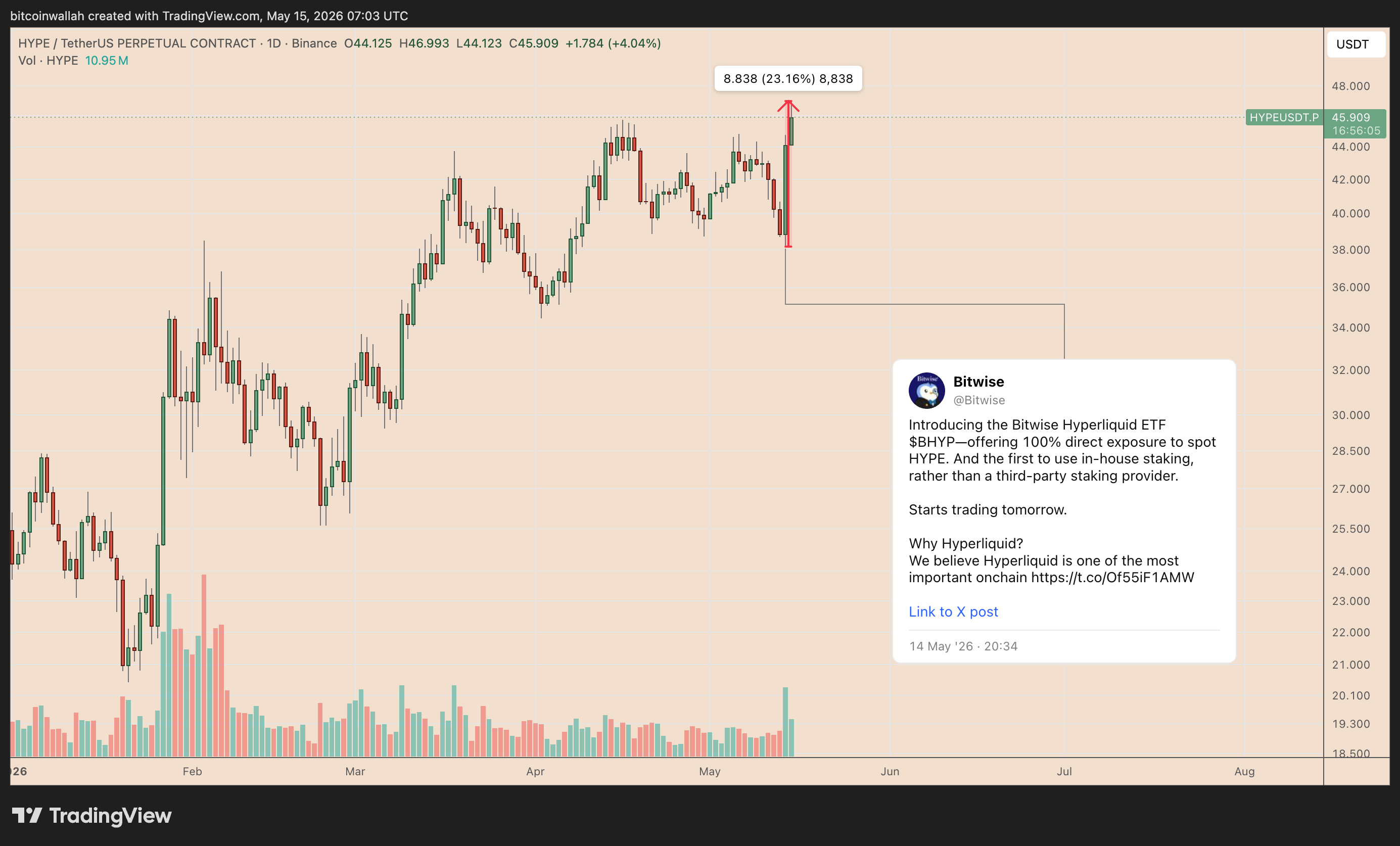
Hyperliquid's native token HYPE climbed more than 23% in 24 hours to approach $47 on Friday, hitting its highest level since October 2025, driven by a convergence of institutional, structural, and regulatory catalysts arriving within the same week. The most immediate trigger was the launch of US-listed spot HYPE ETFs: 21Shares' THYP debuted on Nasdaq on Tuesday and Bitwise's BHYP launched on the NYSE on Friday, giving regulated investors direct exposure to HYPE with staking components built into both products. Lookonchain data suggested wallets linked to a16z purchased approximately $67.5 million worth of HYPE in the month leading up to the ETF launches, adding evidence of institutional positioning ahead of the products going live. The second major catalyst was Coinbase's announcement that it had become the official treasury deployer of USDC on Hyperliquid, strengthening USDC's role as the dominant collateral and quote asset across Hyperliquid's on-chain markets. USDC already accounts for roughly $5 billion in supply on Hyperliquid according to DefiLlama. Under the upgraded AQAv2 framework, Coinbase will share the vast majority of reserve-yield revenue from deployed USDC with the protocol, with analyst Aylo estimating an increase of approximately $140 million in annualized revenue to be used for HYPE buybacks. Circle will also stake 500,000 HYPE tokens as part of the arrangement.
The third tailwind was the broader regulatory momentum from the Senate Banking Committee advancing the CLARITY Act in a 15 to 9 vote on May 14, which improved sentiment across crypto markets and produced intraday rallies in Bitcoin, Ethereum, XRP, and other major assets. HYPE benefited disproportionately given its fully on-chain architecture maps directly onto the bill's DeFi safe-harbor provisions. The ETFs were managing $3.17 million in assets as of Friday according to SoSoValue data — a modest start that reflects launch-week figures rather than steady-state accumulation. Sustained upside will depend on whether inflows build meaningfully beyond the initial launch period rather than fading after the announcement excitement passes.