



















 Earn up to 50% APR
 Boost earnings with NFTs
 Play, HODL & earn more







What Are the Legal and Ethical Concerns Around the TRUMP Memecoin?
-
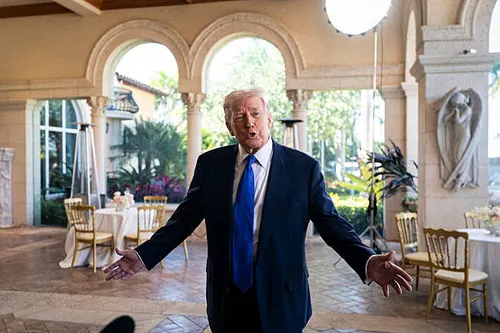
Q: Why are US senators raising concerns about the TRUMP memecoin?
Democratic Senators Elizabeth Warren, Richard Blumenthal, and Adam Schiff sent a letter to event organizer Bill Zanker earlier this month questioning whether the Mar-a-Lago conference was being used to imply or sell access to the sitting President of the United States. Their central concern is that promoting a crypto event by offering face time with Donald Trump effectively incentivizes people to purchase his memecoin — which generates transaction fees that flow to the President and his family — raising serious questions about conflicts of interest at the highest level of government.
Q: Is there a legal problem with a sitting president profiting from a cryptocurrency?
There is no specific law that explicitly prohibits a president from profiting from a cryptocurrency, but the arrangement raises significant conflict of interest concerns that existing ethics frameworks were not designed to address. Critics argue that a president who personally benefits financially from the success of a token has an incentive to make policy decisions — around crypto regulation, financial oversight, or related areas — that favor the token's value rather than the public interest. The scale of the profits involved, with Reuters estimating total Trump family crypto income potentially exceeding $1 billion, makes the conflict more than theoretical.
Q: Has the Trump family disclosed how much it has made from crypto ventures?
The most detailed public accounting came from a Reuters investigation published last year, which reported that the Trump family generated more than $800 million from crypto asset sales in the first half of 2025 alone, with crypto ventures accounting for over 90% of total family income during that period. World Liberty Financial contributed approximately $463 million in token sales, while the TRUMP memecoin added around $336 million. Beyond realized gains, Reuters estimated the family holds potentially billions more in unrealized crypto holdings — a financial stake that grows or shrinks with every policy decision affecting the digital asset market.