



















 Earn up to 50% APR
 Boost earnings with NFTs
 Play, HODL & earn more








Oil Investing in 2026: What the Iran-Hormuz Crisis and Energy Transition Mean for Your Portfolio
-
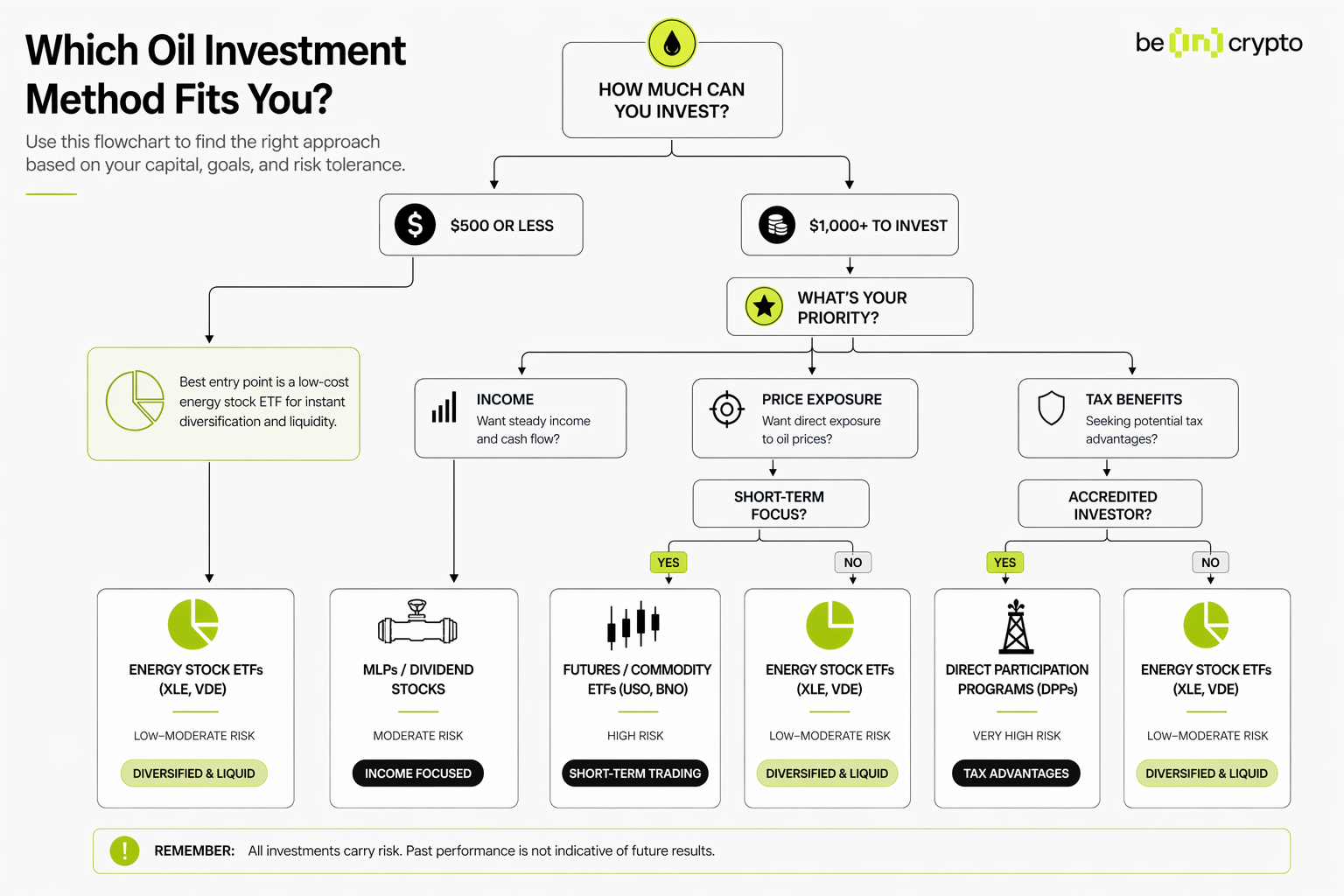
The oil market in 2026 is unlike anything seen in recent memory. The partial closure of the Strait of Hormuz — which typically handles around 20% of global oil flows — triggered what the IEA's executive director described as one of the largest supply shocks in modern energy markets. Iraq's production collapsed 61%, Kuwait dropped 53%, the UAE fell 44%, and Saudi Arabia declined 23%. Brent crude surged above $102 per barrel and WTI held above $89 as of late April, reflecting a market caught between collapsing supply and demand destruction driven by high fuel costs. The IEA simultaneously revised its 2026 demand outlook from growth of 730,000 barrels per day to a contraction of 80,000 barrels per day.For investors, the key lesson from this environment is that oil rewards timing, not long-term conviction. The energy transition is not eliminating oil demand — Vitol projects peak demand at around 112 million barrels per day in the mid-2030s — but it is shortening the investment runway and shifting which strategies hold up best. Gasoline demand is expected to peak in the early 2030s, while jet fuel demand is projected to grow by 2.6 million barrels per day through 2040. That divergence means integrated majors with chemicals and aviation fuel exposure are better positioned than pure upstream exploration companies. The practical adjustments are shorter holding periods, a stronger focus on dividend-paying energy stocks over growth plays, and midstream infrastructure assets that generate stable fee-based revenue regardless of where crude prices go.
-
oil investors in 2026: “am i trading geopolitics or energy?”
-
Iraq oil production down 61%. Kuwait down 53%. UAE down 44%. my electricity bill reading this article and immediately updating itself.