



















 Earn up to 50% APR
 Boost earnings with NFTs
 Play, HODL & earn more







Why Most Oil ETFs Lose Money Over Time — And What to Buy Instead
-
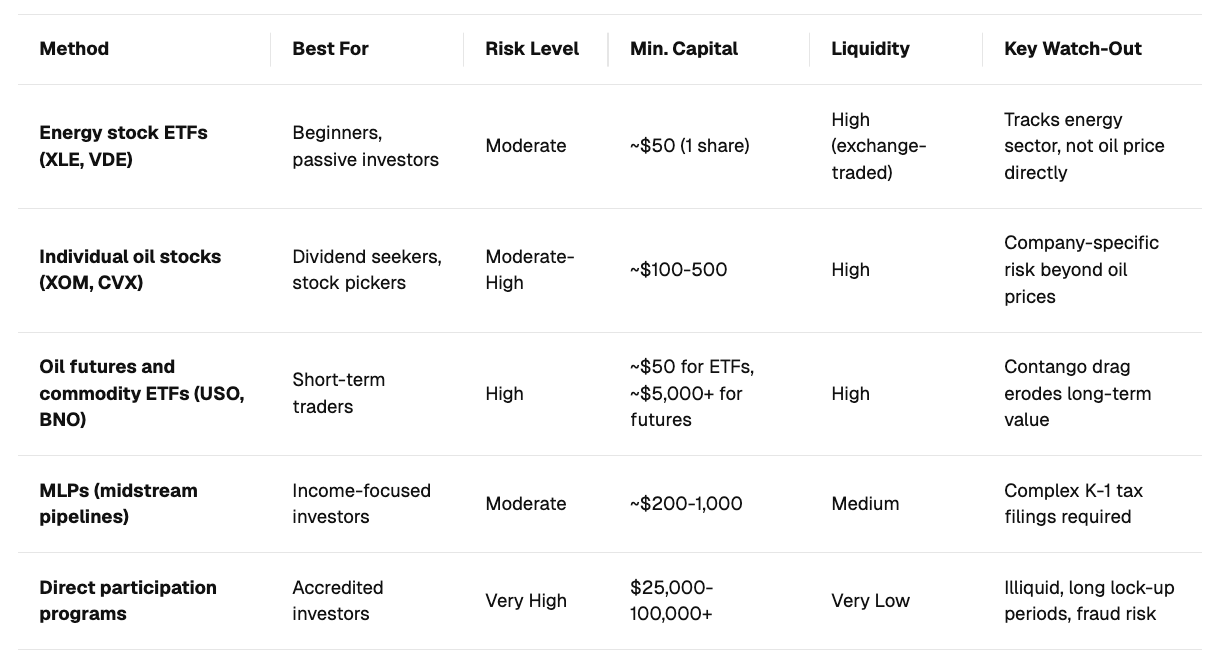
One of the most common and costly mistakes oil investors make is buying a commodity ETF like USO and holding it long term, assuming it will track the price of crude oil. It does not. USO holds futures contracts that expire monthly, and in a market condition called contango — where longer-dated contracts cost more than near-term ones — the fund sells low and buys high every single month. That steady erosion, known as negative roll yield, has delivered USO a negative total return of roughly 21% over the past decade, with annualized returns of around negative 7%. Meanwhile, energy stock ETF XLE returned over 25% in 2026 alone, because equity ETFs carry no roll costs whatsoever.The practical takeaway is straightforward: commodity ETFs like USO are trading tools built for weeks or months, not long-term holdings. If your time horizon is longer than a few months, energy stock ETFs are almost always the better vehicle. If you want more direct crude price exposure for short-term trades, commodity ETFs can work — but you need to size positions accordingly and exit before roll costs compound. Leveraged oil ETFs are even worse, as they combine contango drag with volatility decay, meaning even a correct directional call on oil can still result in losses depending on the price path.
-
ultimately, oil is increasingly a tactical asset—timing and structure dominate over long-term conviction