


















 Earn up to 50% APR
 Boost earnings with NFTs
 Play, HODL & earn more






HYPE Is in a Rising Wedge Pattern That Could Mean a 30%-45% Correction. Here Is the Bull and Bear Case
-
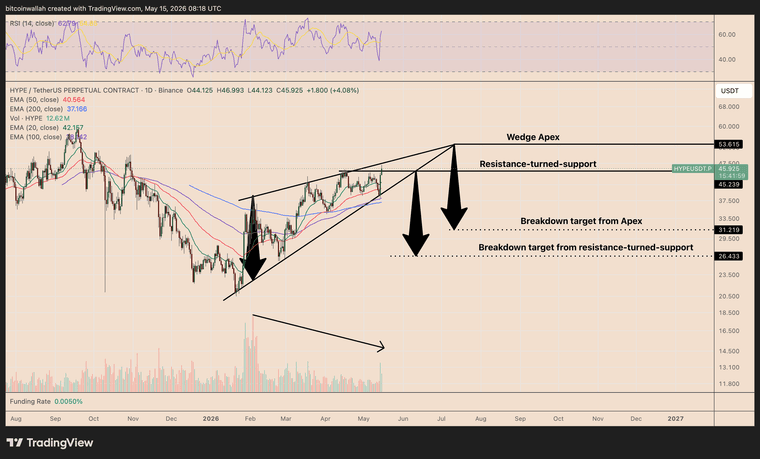
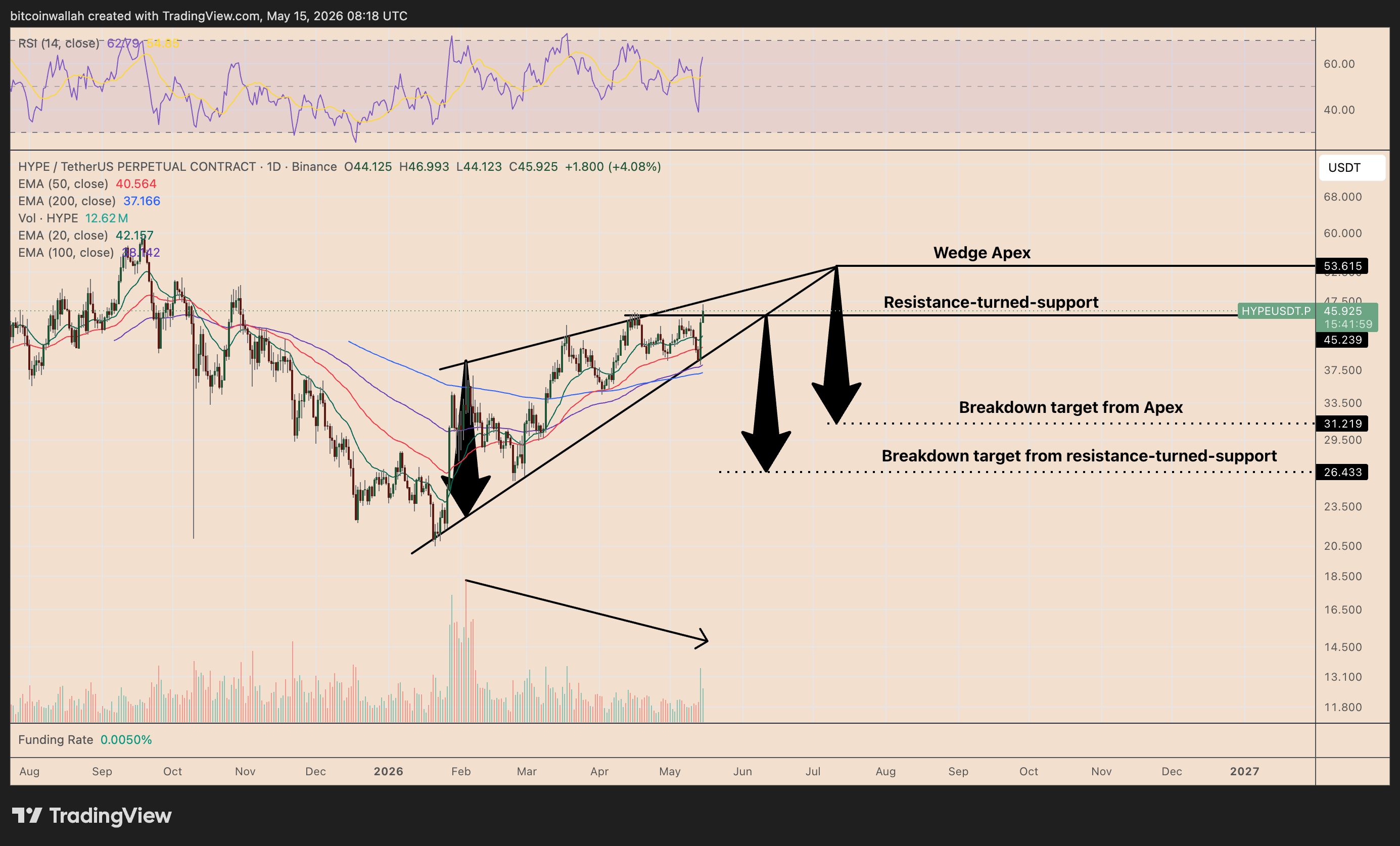
HYPE's 23% surge has placed it inside a rising wedge pattern on the daily chart — two converging upward-sloping trendlines that technical analysts typically treat as a bearish reversal structure. In a rising wedge, price makes higher highs and higher lows but at a progressively slower pace, with the tightening range signaling that buying momentum is exhausting itself. A confirmed breakdown below the lower trendline would project a decline to the $26.50 to $31.20 range depending on where the breakdown occurs, representing a potential 30% to 45% correction from current levels by June or July. The pattern is a genuine risk for traders who entered the position late in the week chasing momentum, and the structure should not be dismissed simply because the fundamental catalysts that drove the rally are real and meaningful.
The bullish counter-scenario is equally specific. A decisive breakout above the rising wedge's upper boundary would invalidate the bearish setup entirely and project a move toward the $59 to $60 range, aligning with the 1.0 Fibonacci retracement level on the chart. The daily RSI reading below the 70 overbought threshold supports the view that HYPE still has technical room to extend its rally before exhausting momentum — an overbought RSI would add weight to the bearish wedge interpretation, but the current reading does not. The fundamental picture also provides genuine support that distinguishes this setup from a purely speculative pump: the Coinbase USDC deployment deal adding an estimated $140 million in annualized protocol revenue for HYPE buybacks, Circle staking 500,000 HYPE, two regulated ETF products now live, and an a16z-linked accumulation of $67.5 million in the month before the launches all represent structural demand factors that would not exist in a purely narrative-driven rally. Whether the wedge resolves bullishly or bearishly depends on whether that structural demand is sufficient to absorb any profit-taking that emerges as the launch-week excitement normalizes.