

















 Earn up to 50% APR
 Boost earnings with NFTs
 Play, HODL & earn more






Why the US Has Not Sanctioned Iran's Largest Crypto Exchange — Despite Overwhelming Evidence
-
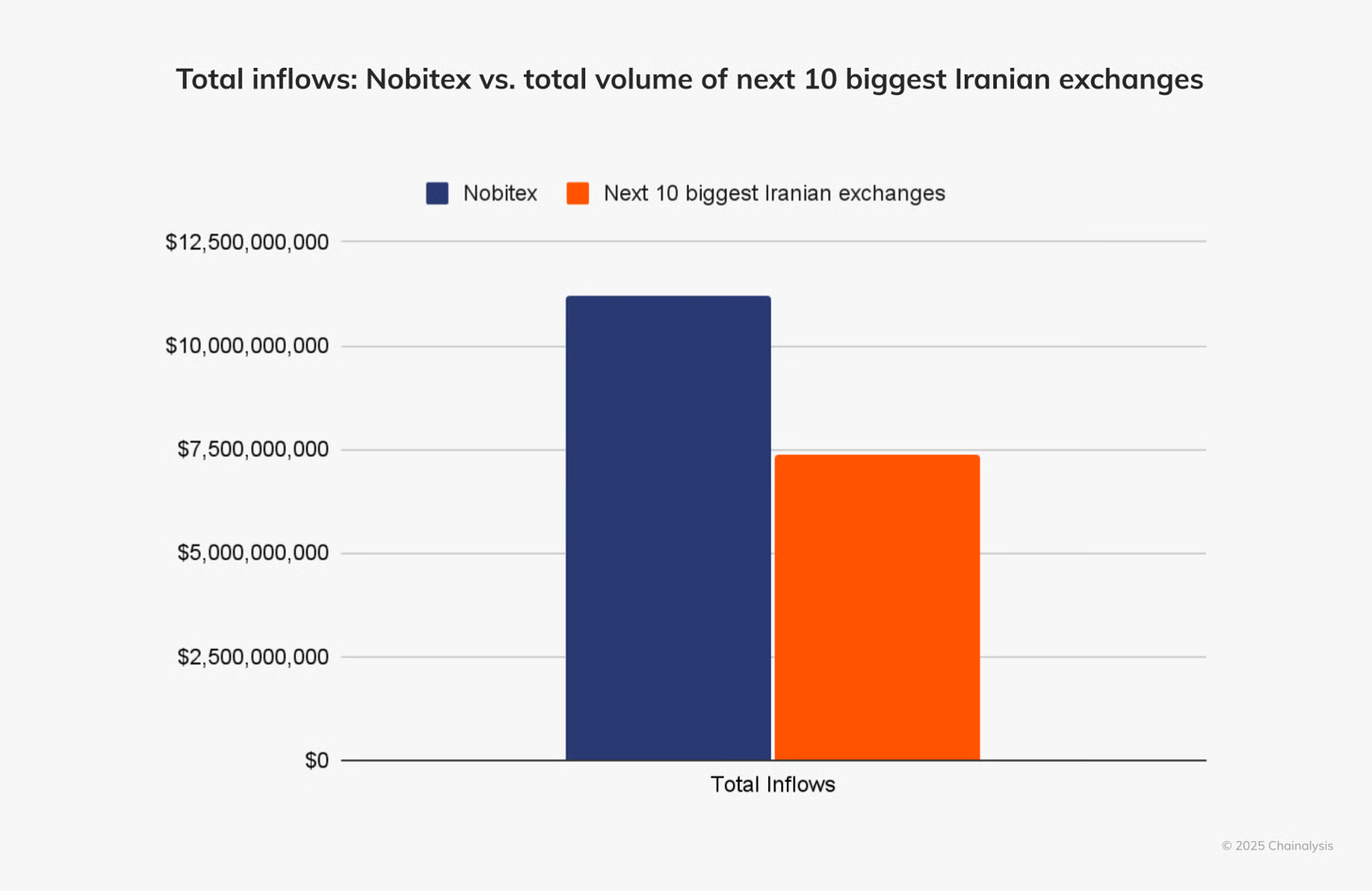
Nobitex has been documented by multiple major blockchain analytics firms as a key node in Iran's sanctions evasion infrastructure, linked to the country's central bank, its Revolutionary Guard-connected political elite, and designated terrorist organizations. Despite all of this, the exchange has never been individually named on OFAC's Specially Designated Nationals List — and understanding why reveals something important about the limits and logic of crypto sanctions enforcement. The US Treasury has previously sanctioned Iran-linked cryptocurrency exchanges, but those were registered in the United Kingdom and other accessible jurisdictions. Nobitex is incorporated in Iran as a purely domestic company, which places it in a different category under OFAC's existing approach. On the same day Reuters published its investigation into Nobitex's connections to Iran's ruling elite, OFAC clarified that Iranian digital asset exchanges are already considered blocked financial institutions regardless of whether they appear individually on the SDN List — a clarification that technically covers Nobitex without requiring a specific designation.
The practical difference between that blanket coverage and an individual SDN listing is significant, however. An individual listing triggers secondary sanctions against any non-US counterparties worldwide, provides direct justification for bulk asset freezes by stablecoin issuers like Tether, and compels foreign exchanges and OTC desks to sever ties or risk being designated themselves. None of those consequences flow automatically from the blanket Iranian financial institution coverage.Three possible explanations for OFAC's restraint have been offered by analysts. First, the Treasury may be following a consistent strategy of not designating platforms physically incorporated within Iran, focusing instead on external intermediaries where enforcement is actually executable. Second, with 11 million ordinary Iranian users' assets commingled with state-directed flows on the same platform, freezing Nobitex would cause substantial collateral damage to civilian financial access — what Crystal Intelligence's Chief Intelligence Officer Nick Smart described to Reuters as a "human shield" dynamic that makes separating regime funds from citizen savings practically impossible. Third, a strike against Nobitex without simultaneous action against its external exits — foreign exchanges, stablecoin issuers, OTC brokers — may be viewed as insufficiently effective to justify the collateral cost.