



















 Earn up to 50% APR
 Boost earnings with NFTs
 Play, HODL & earn more







How to Actually Read Bitcoin ETF Inflows (Without Getting Misled)
-
Bitcoin ETF inflows are one of the most watched signals in crypto right now—but most people misunderstand what they actually show.Here’s the simple breakdown:
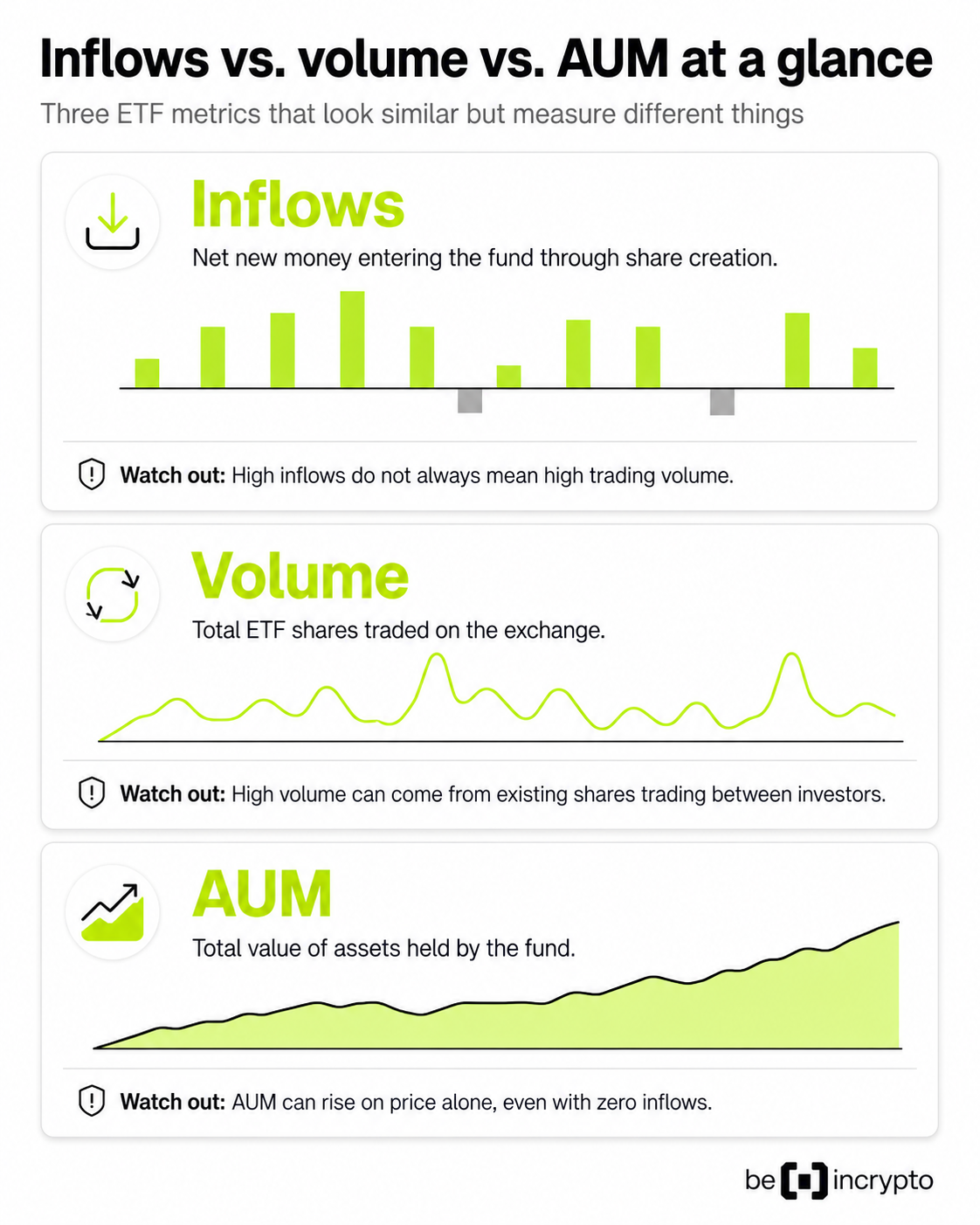
Inflows = new money entering the ETF (new shares created)
Outflows = money leaving (shares redeemed)
Net flow = the difference between the twoThese numbers are reported in USD, not BTC—so the same inflow can represent very different amounts of Bitcoin depending on price.
Why it matters:
When ETFs see consistent inflows, they typically need to buy more Bitcoin, which can reduce available supply on the market. Over time, that demand can support price.But here’s the catch

High trading volume ≠ inflows (it can just be people trading existing shares)
Rising AUM ≠ new demand (it can go up just because BTC price increased)
A single big inflow day ≠ a trendWhat actually matters:
Zoom out.Are inflows happening across multiple ETFs?
Is it sustained over weeks—not just one day?
Is BTC price moving with or against those flows?Because inflows are just one piece of the puzzle.
Bitcoin still reacts to macro trends, derivatives markets, miner activity, and global demand—not just ETFs.ETF inflows are a strong signal of institutional demand—but only when they’re consistent, broad, and aligned with price action. Anything else is just noise.
-
One big inflow day is not a trend, the accounts that called it a trend know who they are
-
ETF inflows explained clearly in a post that most people will share without reading past the first bullet point