











Skip to content
  • Categories
  • Recent
  • Tags
  • Popular
  • World
  • Users
  • Groups
Collapse
Brand Logo
UDS UDS: $0.8328
24h: -1.06%
Trade UDS
Gate.io
Gate.io
UDS / USDT
KuCoin
KuCoin
UDS / USDT
MEXC
MEXC
UDS / USDT
BingX
BingX
UDS / USDT
BitMart
BitMart
UDS / USDT
LBank
LBank
UDS / USDT
XT.COM
XT.COM
UDS / USDT
Uniswap v3
Uniswap v3
UDS / USDT
Biconomy.com
Biconomy.com
UDS / USDT
WEEX
WEEX
UDS / USDT
PancakeSwap v3
PancakeSwap v3
UDS / USDT
Pionex
Pionex
UDS / USDT
COINSTORE
COINSTORE
UDS / USDT
Sushiswap v3
Sushiswap v3
UDS / USDT
Picol
Picol
UDS / USDT

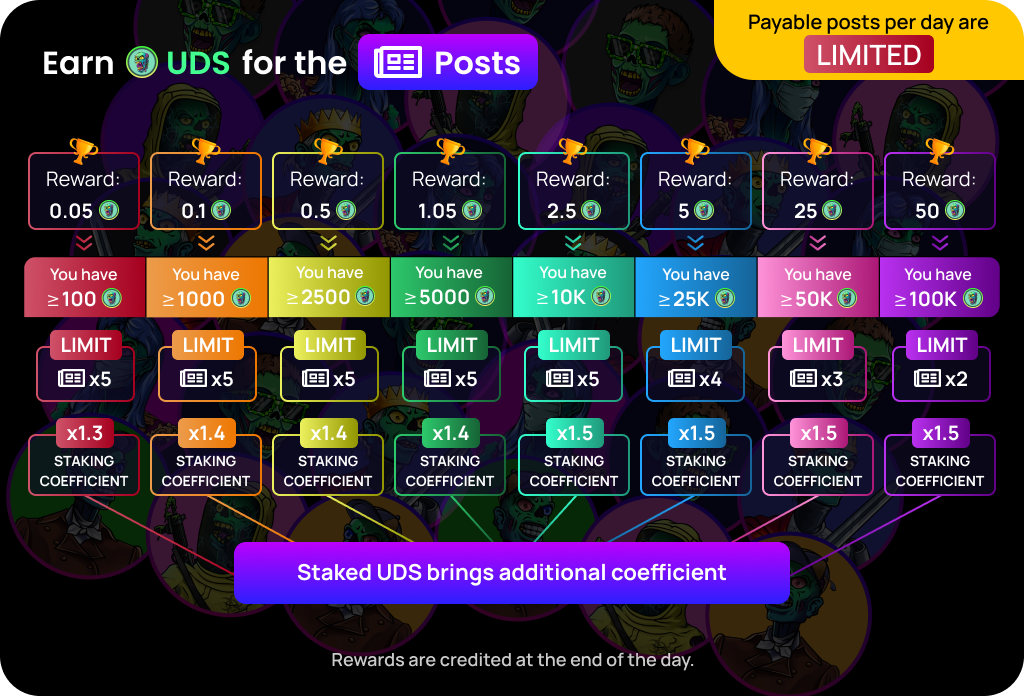
Earn up to 50 UDS per post

Post in Forum to earn rewards!

Learn more
UDS Right

Spin your Wheel of Fortune!

Earn or purchase spins to test your luck. Spin the Wheel of Fortune and win amazing prizes!

Spin now
Wheel of Fortune
selector
wheel
Spin

Paired Staking

Stake $UDS
APR icon Earn up to 50% APR
NFT icon Boost earnings with NFTs
Earn icon Play, HODL & earn more
Stake $UDS
Stake $UDS
UDS Left

Buy UDS!

Buy UDS with popular exchanges! Make purchases and claim rewards!

Buy UDS
UDS Right

INFLUENCER LEVEL

Based on the number of subscribers

MULTIPLIER

up to 10k

x1.1

10-25k

x1.25

25-100k

x1.5

100k-250k

x2

250k-1m

x3

1m+

x5

Post links to Undeads Forum messages or Undeads products to receive additional rewards

Post limits and staking coefficients applied similar to Forum posts

Discord, Telegram, Twiter

Post in Forum to earn rewards!

UDS Rewards
  1. Home
  2. Beyond Blockchain
  3. NASA Accelerates Roman Telescope Launch as Astronomy Enters a “Data Explosion” Era

NASA Accelerates Roman Telescope Launch as Astronomy Enters a “Data Explosion” Era

Scheduled Pinned Locked Moved Beyond Blockchain
3 Posts 2 Posters 38 Views
  • Oldest to Newest
  • Newest to Oldest
  • Most Votes
Reply
  • Reply as topic
This topic has been deleted. Only users with topic management privileges can see it.
  • etfsE Offline
    etfsE Offline
    etfs
    wrote on last edited by
    #1

    01d08e7a-1bb5-4e0f-82b6-f520f9bf7ef4-image.png

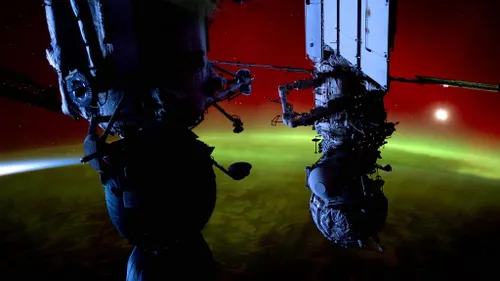
    NASA has announced it will launch the NASA Nancy Grace Roman Space Telescope eight months ahead of schedule, targeting orbit in September 2026. The mission is expected to generate an unprecedented ~20,000 terabytes of scientific data over its lifetime, signaling how quickly space science is scaling into the era of big data astronomy.

    The Roman telescope will join a rapidly expanding observational ecosystem that already includes the James Webb Space Telescope, which streams about 57 GB of imagery daily, and the upcoming survey work from the Vera C. Rubin Observatory in Chile, projected to produce roughly 20 TB of data every night.

    For comparison, the Hubble Space Telescope produces only 1–2 GB per day—highlighting just how dramatic the jump has become.

    This surge in data is fundamentally changing how astronomy is done. Researchers are no longer manually inspecting small datasets; instead, they’re relying on GPUs and AI systems to process cosmic-scale information streams. Tools like deep learning models are now being used to identify galaxies, analyze structure formation, and even enhance ground-based telescope images distorted by Earth’s atmosphere.

    As one researcher described it, the field is shifting from “looking at a few objects” to running GPU-accelerated, AI-driven analysis across the entire observable universe—forcing universities and labs to compete for limited compute resources just to keep up.

    With Roman launching early and Rubin and Webb already in motion, astronomy is entering a phase where the biggest bottleneck isn’t telescopes anymore—it’s compute.

    1 Reply Last reply
    0
    • mendezM Offline
      mendezM Offline
      mendez
      wrote on last edited by
      #2

      hubble: 1 GB a day, doing its best. roman telescope: 20,000 terabytes. hubble said "i am so tired"

      1 Reply Last reply
      0
      • mendezM Offline
        mendezM Offline
        mendez
        wrote on last edited by
        #3

        AI doing galaxy classification at scale isn't optional at this data volume — it's the only viable path. The question is how you validate a deep learning model's discoveries when the ground truth is literally unknown. That's a serious epistemological problem for the field.


        1 Reply Last reply
        0


        • Login or register to search.
        Powered by NodeBB Contributors
        • First post
          Last post
        0
        • Categories
        • Recent
        • Tags
        • Popular
        • World
        • Users
        • Groups