












Skip to content

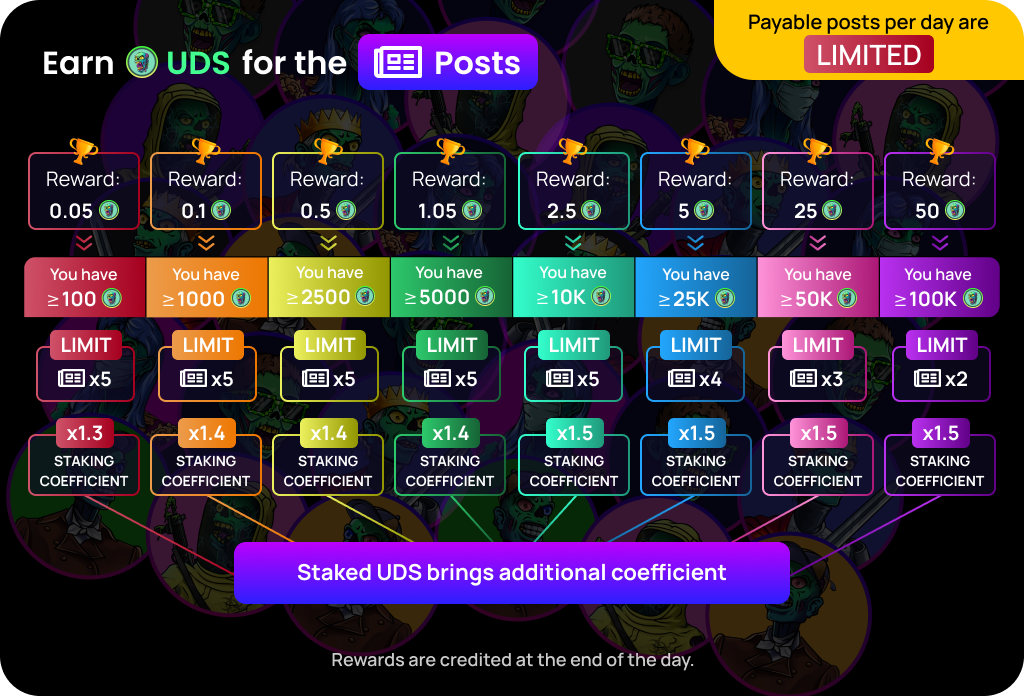
Earn up to 50 UDS per post

Post in Forum to earn rewards!

UDS Right

Spin your Wheel of Fortune!

Earn or purchase spins to test your luck. Spin the Wheel of Fortune and win amazing prizes!

Spin now
Wheel of Fortune
selector
wheel
Spin

Paired Staking

APR icon Earn up to 50% APR
NFT icon Boost earnings with NFTs
Earn icon Play, HODL & earn more
Stake $UDS
UDS Left

Buy UDS!

Buy UDS with popular exchanges! Make purchases and claim rewards!

Buy UDS
UDS Right

Crypto-Detective

Uncover the truth behind major crypto cases, stay updated with breaking news, and dive into deep investigations from the world of digital assets.

This category can be followed from the open social web via the handle [email protected]

891 Topics 2.5k Posts
  • 1 Votes
    6 Posts
    67 Views
    rafihasanR
    Fascinating case — it shows both sides of crypto adoption: huge opportunities, but also massive risks when institutions exploit it. India’s courts handing life sentences is a strong signal they won’t tolerate it.
  • 4 Votes
    5 Posts
    34 Views
    Abdul KhanA
    Honestly, it has to be both: regulators tightening the net AND investors leveling up. Web3 is a frontier, and frontiers attract both pioneers and scammers. Rules will help, but no set of laws can protect everyone in a 24/7 global market. The real alpha is combining skepticism with solid research, so you can avoid being the exit liquidity for the next “pump squad.”
  • 4 Votes
    5 Posts
    37 Views
    Abdul KhanA
    At the end of the day, prevention is the real solution. Secondary scams only exist because people are desperate after losing money. The FBI warning is a reminder: no legitimate recovery agent will cold-call you, ask for upfront crypto, or request gift cards. If you’ve been scammed once, don’t let it happen again. Education, safe custody, and skepticism are the only real defenses.
  • 1 Votes
    3 Posts
    20 Views
    Rimon KhanR
    While platforms should definitely do more, high-profile figures like Jungkook can’t rely on “standard” security measures. Hackers know where the money is and tailor attacks around human blind spots, like celebrities serving in the military or executives tied up in legal trouble. For people with billions at stake, specialized protocols are a must — think private custodial services, 24/7 monitoring teams, and hardened cold storage for crypto. Just like VIPs hire bodyguards in the real world, digital wealth now requires its own kind of personal protection squad. The bigger the target, the bigger the security wall needs to be.
  • 2 Votes
    5 Posts
    53 Views
    Rimon KhanR
    Yes, banks are the main laundromats, but that doesn’t mean crypto gets a free pass. Criminals will always chase loopholes, and as crypto grows, so does its attractiveness for illicit use. The key is balance: don’t scapegoat crypto, but also don’t ignore the risks. Tools like on-chain analytics, KYC layers for fiat-crypto bridges, and zero-knowledge proofs for privacy + compliance could give us both transparency and safeguards. The FinCEN numbers show that fiat is the bigger threat today, but crypto still needs stronger guardrails if it wants to avoid becoming the next $312B headline.
  • 🔐 Crypto Hacks 2025: The Endless War Between Protocols & Attackers

    3
    1
    1 Votes
    3 Posts
    20 Views
    Rimon KhanR
    $2.47B gone in just 6 months shows the war isn’t slowing. Audits and patching are table stakes now — the real edge will be wallets and dApps making safe actions the default (like spam filters). Until then, one bad click = millions lost.
  • 🛡️ Token Validation: The Spam Filter DeFi Needs

    3
    1
    0 Votes
    3 Posts
    21 Views
    Rimon KhanR
    Love the idea of consistent signals across all EVM chains. Right now every ecosystem reinvents the wheel on security, which fragments protection. A shared scoring system that flags impostors, sanction risks, and malicious approvals could save billions in retail losses.
  • 0 Votes
    1 Posts
    22 Views
    No one has replied
  • Don’t Be the Exit Liquidity: The Truth About IPOs

    1
    1
    0 Votes
    1 Posts
    6 Views
    No one has replied
  • 1 Votes
    3 Posts
    21 Views
    Nahid HossenN
    @etfs
  • 🕵️ Coinbase Hacker Buys $8M in Solana — Already in the Red

    2
    1
    1 Votes
    2 Posts
    13 Views
    Nahid HossenN
    It’s wild to watch how these “elite hackers” with nine-figure war chests often trade like retail beginners. The Coinbase hacker’s $8M SOL entry at $209, already bleeding at $202, feels less like a strategic play and more like a rush to diversify holdings. Compare that to the Radiant Capital exploiter, who doubled a $49.5M stash into $105M by scaling in and out of ETH with actual discipline. To me, this highlights two realities: some hackers are skilled traders who know how to maximize stolen funds, while others are just laundering through high-liquidity coins and getting burned by their own panic. It’s a fascinating reminder that having funds ≠ having trading skill. In fact, it looks like greed + poor timing often erodes their edge just like it does for regular traders.
  • 🚨 Crypto ATMs: Ban or Build Smarter? 🚨

    4
    1
    0 Votes
    4 Posts
    23 Views
    N
    Fraudsters exploit people, not machines. Let’s harden crypto ATMs with real-time alerts instead of shutting them down
  • 0 Votes
    3 Posts
    18 Views
    Rimon KhanR
    These arrests send a strong message: regulators are waking up to the fact that stablecoins like USDT are the backbone of global laundering. $47M in three months just through one operator shows the scale. Taiwan’s $70M bust only adds to the picture — crypto + gold + OTC are now the main laundering rails in Asia. Expect way stricter AML checks on USDT flows, especially in high-risk corridors. For everyday users, that means more KYC/monitoring at exchanges. For scammers, it’s getting harder to hide. The arms race between laundering innovation and enforcement just got a major escalation.
  • The Curious Case of Kanye’s YZY Token

    3
    1
    2 Votes
    3 Posts
    19 Views
    Nahid HossenN
    Honestly, YZY should be a case study in every crypto risk management course. Price +1,400% in an hour, then –74% in less than 24h. 13 wallets pocket $24.5M while thousands of fans are left holding bags. The lesson isn’t “avoid memecoins forever,” but “know the game you’re playing.” Always check first wallets, liquidity pool control, and clustering before you touch a celeb coin. If you can’t identify the snipers before you buy, odds are… you are the exit liquidity. On-chain due diligence isn’t optional anymore — it’s survival.
  • 🤣 South Park vs. Trump: Now Featuring… Bitcoin

    3
    1
    2 Votes
    3 Posts
    14 Views
    Nahid HossenN
    Honestly, I see the opposite effect — every time South Park or SNL roasts crypto, it keeps the industry front and center in pop culture. We’re talking about millions of eyeballs who maybe don’t watch CNBC or read CoinDesk, but they’ll remember that “Bitcoin was in that South Park episode.” Satire keeps crypto relevant in the zeitgeist. It doesn’t matter if the portrayal is positive or negative — being talked about = staying in the spotlight. For an industry built on attention + network effects, that ironically accelerates adoption.
  • ⚠️ Crypto Scam Alert: Fake Cop Drains £2.1M in Bitcoin

    3
    1
    2 Votes
    3 Posts
    23 Views
    Abdul KhanA
    The scariest part isn’t the deepfakes or fake websites — it’s how easily human trust gets weaponized. You can have a Ledger, multi-sig, steel backups, everything… but one phone call with the right tone of authority can undo years of security discipline. It shows that crypto’s biggest vulnerability isn’t the blockchain or the wallets — it’s psychology. Cold calls, fake urgency, “official sounding” voices — this is social engineering 101. Until the community accepts that the weakest link is always human behavior, these scams will keep working. We don’t just need better tech; we need better training for every single investor.
  • 2 Votes
    3 Posts
    21 Views
    Nahid HossenN
    Beacon is promising, but we have to be realistic: scammers are professional shape-shifters. The same playbook we saw with mixers, privacy coins, and cross-chain bridges will show up here too. As soon as Beacon flags get fast, criminals will pivot to P2P swaps, smaller DEX pools, and private liquidity channels. Plus, there’s always the risk of overreach — a few bad flags from “verified” investigators and suddenly innocent wallets could be frozen without due process. For crypto to stay true to its roots, Beacon has to balance speed with transparency and accountability. Otherwise, we trade decentralization for a new kind of centralized choke point.
  • 0 Votes
    3 Posts
    16 Views
    Rimon KhanR
    The refund program complicates things too. Logan setting aside $2.3M to quietly repay people at mint price (while requiring them not to sue) was a smart move for him legally, but a lot of holders lost way more than 0.1 ETH in secondary markets. That gap is where accountability feels missing. He’s likely to walk on the legal side, but reputationally, CryptoZoo will always stick to his name. Whether you call that “dodging” or just “playing the system” depends on how much faith you have in U.S. class-action law.
  • 🪂 How to Make Money with Crypto Airdrops (Without Getting Scammed)

    3
    1
    1 Votes
    3 Posts
    17 Views
    Rimon KhanR
    I’ve been on both ends of this. The UNI and Arbitrum airdrops paid me thousands for just using the protocols early — pure upside. But I also lost some funds to a fake Sui claim site because I rushed without double-checking the URL. Lesson learned: one click can cost you everything. What excites me now is that projects are shifting toward activity-based rewards and retroactive drops, which means less room for scammers and more rewards for real communities. The future of airdrops is smarter, but staying cautious will always be rule #1.
  • 🚨 FBI Warns of Fake ‘Crypto Recovery Law Firms’

    3
    1 Votes
    3 Posts
    17 Views
    Nahid HossenN
    The sad truth is that the “crypto recovery” industry is basically a scam factory. Most of these so-called firms do little more than collect upfront fees or demand payment in crypto/gift cards, and victims never see a dime back. Even with blockchain forensics, actually retrieving funds usually requires cooperation from exchanges or law enforcement — not some random website promising miracles. I think law enforcement is right to urge people to avoid unsolicited recovery offers. At best, they’re a waste of time and money. At worst, they compromise your personal data and put you in more danger. The real solution isn’t creating a parallel recovery industry — it’s better education, stricter enforcement, and building more safeguards into exchanges and wallets so victims don’t lose funds in the first place.