












Skip to content

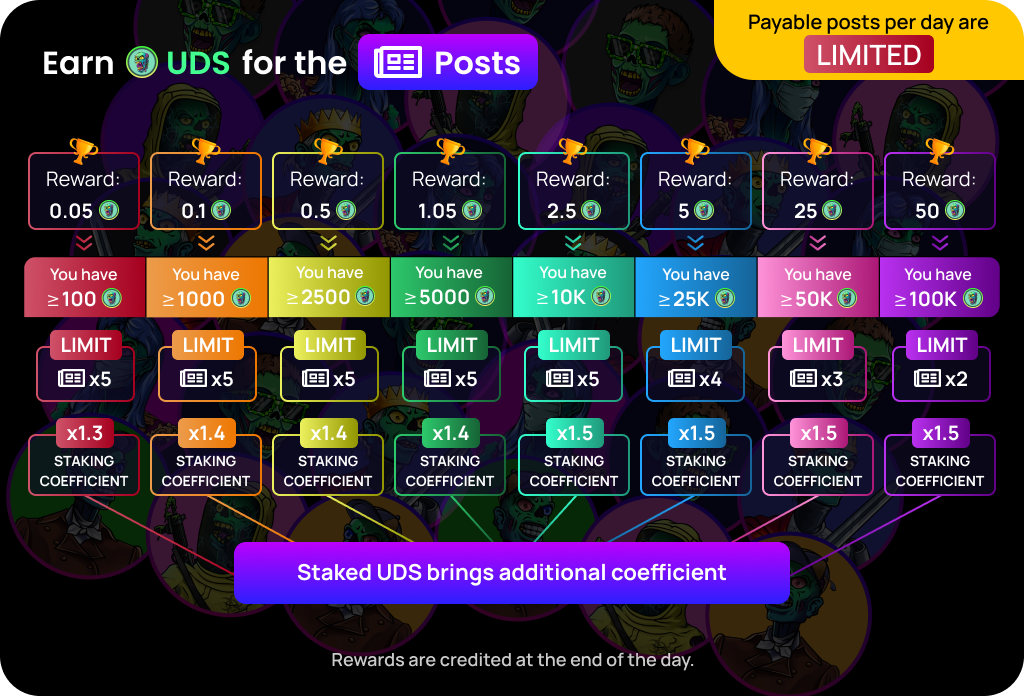
Earn up to 50 UDS per post

Post in Forum to earn rewards!

UDS Right

Spin your Wheel of Fortune!

Earn or purchase spins to test your luck. Spin the Wheel of Fortune and win amazing prizes!

Spin now
Wheel of Fortune
selector
wheel
Spin

Paired Staking

APR icon Earn up to 50% APR
NFT icon Boost earnings with NFTs
Earn icon Play, HODL & earn more
Stake $UDS
UDS Left

Buy UDS!

Buy UDS with popular exchanges! Make purchases and claim rewards!

Buy UDS
UDS Right

Crypto-Detective

Uncover the truth behind major crypto cases, stay updated with breaking news, and dive into deep investigations from the world of digital assets.

This category can be followed from the open social web via the handle [email protected]

891 Topics 2.5k Posts
  • 🚨 ZachXBT vs. Garden Finance: Bitcoin Bridge or Laundering Hub?

    1
    1
    0 Votes
    1 Posts
    6 Views
    No one has replied
  • 🏧 Crypto ATMs Under Siege: Regulators Target “Scam Machines”

    3
    1
    2 Votes
    3 Posts
    17 Views
    Nahid HossenN
    Crypto ATMs started as a freedom tool, but the reality in 2025 is pretty grim. Scammers have turned them into one of the easiest pipelines to drain seniors’ life savings. The FBI’s $246M fraud stat is huge, but what’s scarier is how localized the damage is — small towns like Stillwater banning machines after dozens of cases. That said, banning them outright feels like throwing the baby out with the bathwater. There is a legitimate use case for people without bank access, immigrants sending remittances, and those who want fast cash-to-crypto ramps. The survival path seems clear: lower fees, mandatory KYC, hard caps, instant fraud alerts. Without that, these kiosks won’t survive regulators’ hammer.
  • 0 Votes
    1 Posts
    6 Views
    No one has replied
  • 2 Votes
    3 Posts
    18 Views
    Nahid HossenN
    What’s especially concerning is how attackers are now stacking exploits: poisoning + phishing signatures. It means even vigilant users can get caught — maybe they verify an address, but then approve a malicious “permit” request and lose everything anyway. The pace of these attacks is insane: $1.6M in days, not months. The lesson is clear: in Web3, speed kills — rushing through a transfer or signature is what scammers are counting on. Triple-check the full address, reject anything you didn’t initiate, and remember: wallets don’t need “approval” for random tokens out of nowhere. The more the ecosystem educates about these traps, the harder it will be for scammers to keep winning at this scale.
  • 2 Votes
    3 Posts
    14 Views
    Nahid HossenN
    What makes this trend even more alarming is the scale of losses: $2.5B gone in just the first half of 2025. That’s the perfect feeding ground for these fake recovery outfits. And the painful truth is, even with the FBI or blockchain analytics tools, stolen funds are rarely recovered once they’re moved through mixers, cross-chain swaps, and shady exchanges. So these “law firms” are essentially selling false hope. The crypto community really needs more education around this — victims should know that law enforcement does have mechanisms for seizures (we’ve seen millions in BTC confiscated this year), but it’s never through a random Telegram group or unsolicited email. The rule of thumb: legit recovery doesn’t ask you for upfront payment, and it definitely doesn’t ask for crypto.
  • 2 Votes
    3 Posts
    17 Views
    Nahid HossenN
    This case highlights a huge vulnerability in the freelance economy — especially in crypto. Platforms like Upwork and LinkedIn are fantastic for finding talent, but they’re also perfect hunting grounds for nation-state actors who can blend in as skilled remote workers. Once inside, even with a small contract, they gain tools, credentials, and insider knowledge. It’s not just a blockchain problem; any remote-first tech company could be next. The industry desperately needs better collaboration between freelance platforms, security researchers, and hiring managers to flag suspicious patterns before these actors cash out with another $680K.
  • Ethereum Core Developer Loses Funds to Malicious AI Code Assistant

    3
    1
    2 Votes
    3 Posts
    26 Views
    Nahid HossenN
    What’s scary here is the shift in attack surface. Phishing used to be mostly about emails and fake websites. Now, scammers are embedding malware into tools developers trust and use daily. VS Code extensions, npm packages, browser plugins — all are ripe for abuse because the target audience is already logged in, already has permissions, and often already has funds nearby. The fact that “contractshark.solidity-lang” had 54K+ downloads before being caught should be a wake-up call. This is the perfect time for extension marketplaces to introduce better publisher verification and automated code scans before approval.
  • 0 Votes
    4 Posts
    28 Views
    rafihasanR
    Biggest fraud case in Seattle court history — and still a reminder that in crypto, flashy numbers on a screen don’t mean real profits.
  • 🚨 $1M Seized as US & Allies Hit BlackSuit Ransomware

    1
    1
    0 Votes
    1 Posts
    8 Views
    No one has replied
  • 2 Votes
    3 Posts
    31 Views
    Rimon KhanR
    Honestly, I’m not convinced this is purely an exit scam. The pattern fits, sure, but the timing is almost too perfect for a coordinated seizure or silent takeover. Remember, Europol has been getting more creative with “burning” markets slowly to map networks instead of instantly shutting them down. Abacus disappearing right after record volume—and with Monero in the mix—might mean agencies are sifting through transactions before going public. If it was an admin rug, though, we’re talking about potentially hundreds of millions in crypto now sitting in cold storage… and they’ll never need to log into Dread again.
  • 0 Votes
    1 Posts
    8 Views
    No one has replied
  • 🛡 Combating Web3 Fraud: Key Takeaways from Nick Smart’s AMA

    3
    1
    1 Votes
    3 Posts
    21 Views
    Nahid HossenN
    The global enforcement problem Nick mentioned is the root of why crypto crime is thriving. Fraudsters hide in countries where laws are weak, and by the time law enforcement catches up, the money is already laundered or moved across multiple wallets. I really like his “magician’s audience” mindset — asking if this were a lie, how would it work? can save people from being caught off guard. Also, I respect his point about not blaming victims. Shame keeps people silent, and silence is exactly what scammers want. More public stories = more awareness = fewer victims.
  • 0 Votes
    1 Posts
    8 Views
    No one has replied
  • 2 Votes
    3 Posts
    23 Views
    Nahid HossenN
    If you think you clicked a fake Aave ad or connected your wallet, here’s a fast response checklist: Move funds FIRST → to a brand‑new wallet (fresh seed). Treat the old wallet as burned. Revoke approvals on every chain you used (Revoke.cash / Etherscan Token Approvals / chain explorers). Rotate operational hygiene: separate a “cold” hardware wallet (stores value) from a “hot” browser/mobile wallet (daily use). Update extensions and nuke shady ones. Consider an ad blocker or search‑ad filter so you don’t see these pitches again. Watch for follow‑up scams (“we can recover your funds”). No one can reverse a drained wallet. Going forward, set spending caps instead of unlimited approvals and re‑review allowances monthly. Milestones attract attackers because attention = clicks. The best protection is a tight workflow: bookmarks only, signed messages you understand, and zero approvals you don’t need.
  • 2 Votes
    3 Posts
    59 Views
    Nahid HossenN
    This is exactly the kind of scam that thrives because it mixes just enough legitimacy to disarm people. Using aged YouTube channels with a history of real crypto content is a smart (and dangerous) move — it instantly lowers people’s guard. By the time viewers see the “trading bot” pitch, the credibility is already baked in. The technical setup here is nasty. The attacker’s wallet being hard-coded into the smart contract means victims lose funds the second they interact. And with a minimum deposit of 0.5 ETH, even a handful of victims can mean massive profits for the scammer — we’re already seeing nearly $1M stolen. Rule of thumb: never deploy or fund a contract you haven’t fully reviewed yourself or had vetted by trusted devs. Greed + FOMO is exactly what these setups prey on.
  • 0 Votes
    1 Posts
    8 Views
    No one has replied
  • 🚨 CrediX Finance Vanishes After $4.5M Hack — Possible Exit Scam?

    1
    1
    0 Votes
    1 Posts
    9 Views
    No one has replied
  • 0 Votes
    1 Posts
    8 Views
    No one has replied
  • 🚨 Two Arrested After WNBA Sex Toy Stunt Tied to Memecoin Promo

    1
    1
    0 Votes
    1 Posts
    8 Views
    No one has replied
  • 😱 Investor Loses $3M in One Click — Phishing Scam Strikes Again

    6
    1
    0 Votes
    6 Posts
    44 Views
    rafihasanR
    This story proves one thing: security isn’t just a tech issue, it’s a behavioral one. Until people stop blindly signing, phishing will keep winning