



















 Earn up to 50% APR
 Boost earnings with NFTs
 Play, HODL & earn more






How DSJ Exchange Allegedly Took Over 150 Million Dollars From Investors Despite Multiple Official Warnings
-
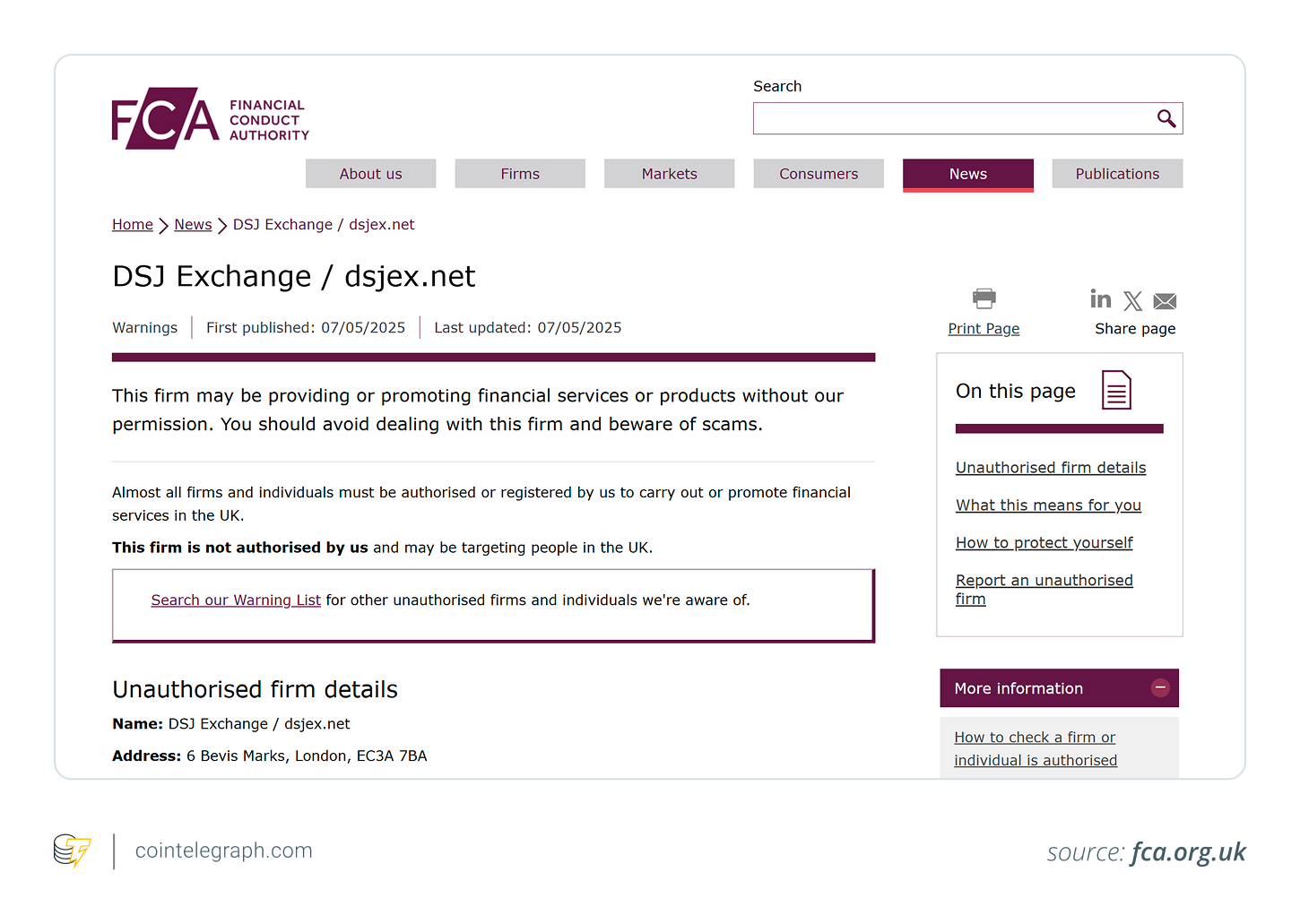
The collapse of DSJ Exchange has become one of the most discussed crypto fraud cases of 2026, with regulators, law enforcement, and on-chain analysts estimating the platform drew over $150 million from participants before going dark between late April and early May. What makes the case particularly striking is that authorities in multiple countries had already issued public warnings long before the collapse. The UK's Financial Conduct Authority flagged the platform as early as May 2025 for potentially offering unauthorized financial services, and by early 2026 approximately 13 regulators across five continents had raised concerns about DSJ or its affiliated entities. Despite those warnings, new investments continued flowing in, highlighting one of the most persistent challenges in crypto fraud prevention: polished interfaces, active community support, and attractive return promises can be powerful enough to override even official regulatory alerts in the minds of investors.
DSJ Exchange was reportedly connected to a larger entity known as BG Wealth Sharing, which marketed various investment programs centered on crypto trading. On the surface the platform appeared entirely credible, with polished dashboards, visible account balances, interactive trading screens, and performance metrics that closely resembled those of established exchanges. Users were reportedly offered daily returns ranging from 1.3% to 2.6% through supposedly automated or expert-managed trading strategies, framed with technical-sounding language about proprietary algorithms and AI-powered tools designed to discourage close scrutiny. Regulators ultimately concluded the setup showed typical signs of a Ponzi arrangement, where payouts to early participants relied on fresh capital from later ones rather than genuine trading profits.