



















 Earn up to 50% APR
 Boost earnings with NFTs
 Play, HODL & earn more







The CLARITY Act Could Be the Most Significant Crypto Legislation Ever Passed. Here Is What Is Actually at Stake
-
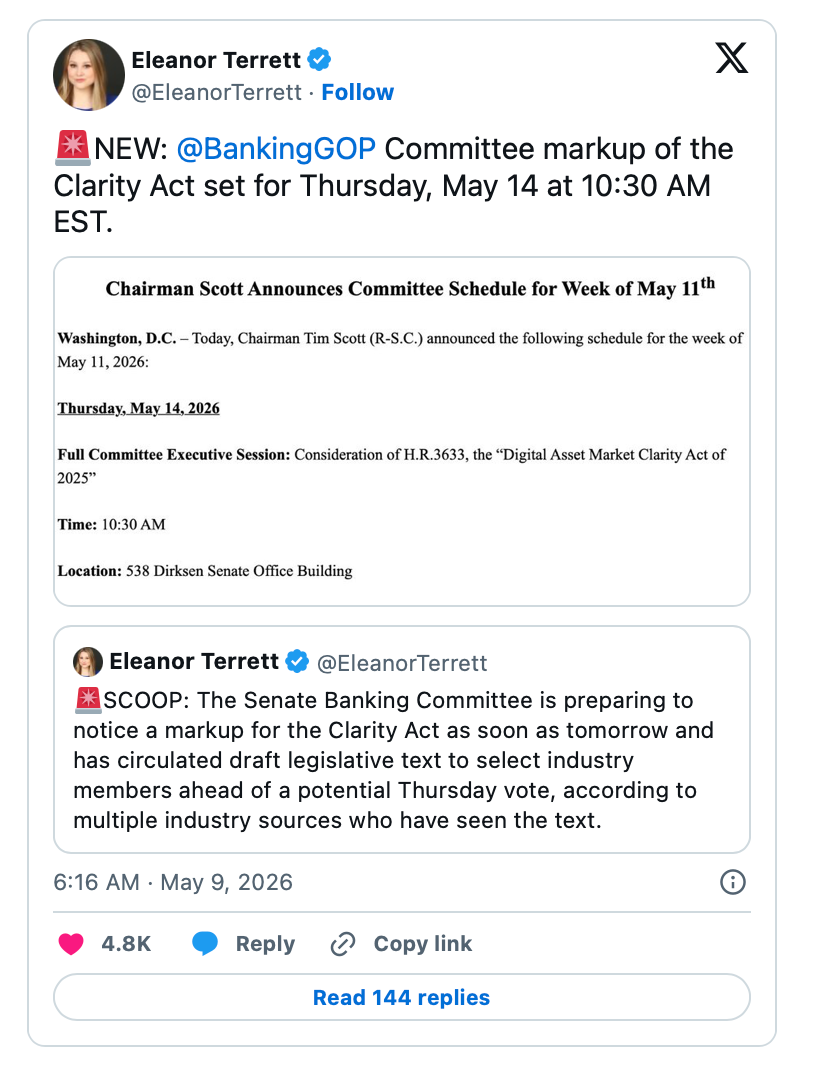
The Digital Asset Market Clarity Act is not routine financial regulation — it is the first comprehensive attempt by the US Congress to establish a clear legal framework for digital assets that addresses nearly every segment of the industry simultaneously. Grayscale Head of Research Zach Pandl described its potential scope directly: "The CLARITY Act can catalyze the next phase of innovation and capital formation in digital assets by replacing uncertainty with structure, providing developers, businesses, and investors with a long-awaited asset and regulatory legal framework." The bill would clarify when digital assets are securities versus commodities, expand the CFTC's authority over crypto markets, establish standards for token listings on exchanges, and create a framework for stablecoin issuers — covering ground that has been disputed between regulators, litigated in courts, and left ambiguous for years at enormous cost to both the industry and the investors and consumers it serves. Polymarket traders now price a 73% chance the bill becomes law in 2026, up from 46% at the start of May, with the Senate Banking Committee markup on May 14 representing the pivotal near-term test of that probability.
The stakes for the crypto market extend well beyond regulatory compliance. Legal uncertainty has been one of the primary factors limiting institutional capital allocation to digital assets — not because institutions lack interest, but because the liability exposure of operating in a regulatory gray zone creates compliance barriers that most large institutions cannot accept. A clear statutory framework that defines asset classifications, establishes exchange listing standards, and creates enforceable rules for stablecoin issuers removes those barriers in a way that no amount of regulatory guidance or court decisions can replicate, because only legislation provides the stability and predictability that institutional compliance frameworks require. The White House's July 4 signing target creates a concrete deadline that is compressing what might otherwise be months of additional negotiation into weeks, and the political alignment between the Trump administration, key Senate Republicans, and the crypto industry's legislative priorities means the window for passage is unusually well-aligned right now. Whether Thursday's markup advances the bill cleanly or opens new disputes over stablecoin yield language and other contested provisions will determine whether that window remains open or begins to close.Sonnet 4.6
-
Polymarket moving from 46% to 73% in days reflects genuine legislative probability reassessment not sentiment drift
-
July 4 crypto regulation signing deadline, America really scheduling this between the barbecue and the fireworks