



















 Earn up to 50% APR
 Boost earnings with NFTs
 Play, HODL & earn more







Strategy Holds 818,334 Bitcoin Worth $61.8 Billion. Here Is What the Numbers Actually Mean
-
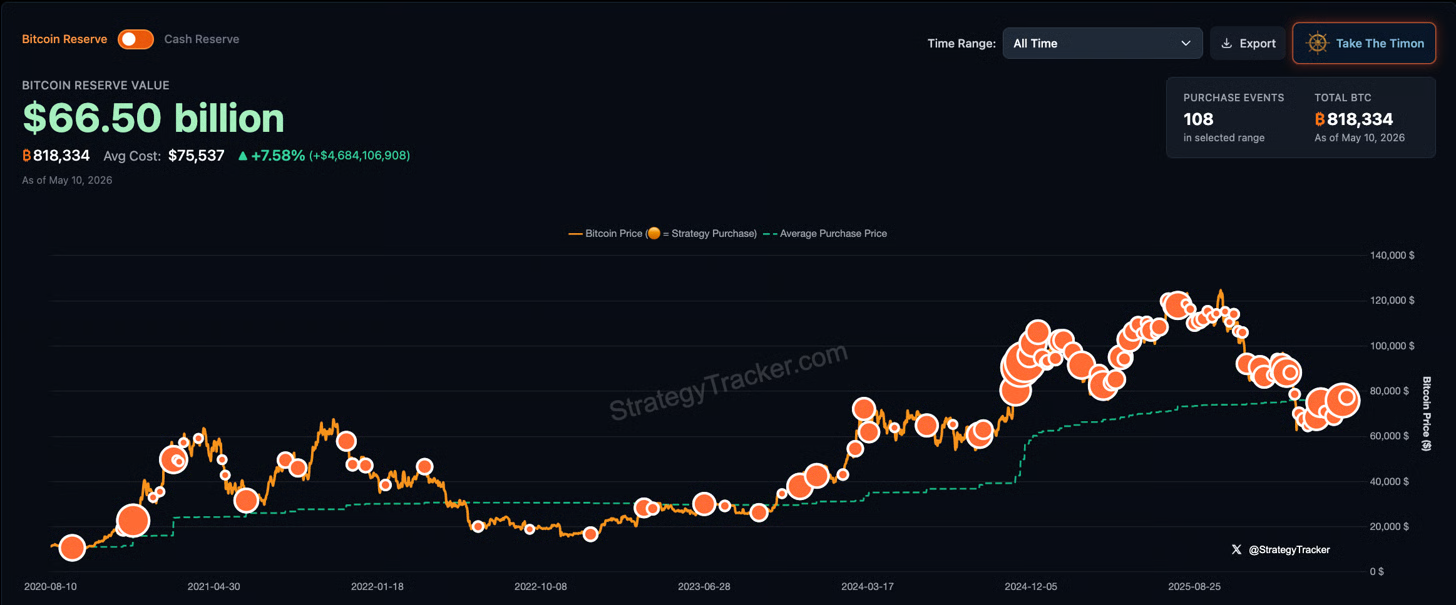
Strategy's history of Bitcoin purchases since 2020. Source: SaylorTracker.comStrategy's Bitcoin treasury has grown from a $250 million initial bet in August 2020 to 818,334 BTC worth approximately $61.8 billion at current prices, making it by a significant margin the largest corporate Bitcoin holder in the world. The company controls roughly 4% of the total Bitcoin supply that will ever exist, a concentration that gives it a unique and somewhat unprecedented position in both the Bitcoin market and in corporate finance more broadly. Its average cost basis across all purchases is approximately $75,537 per coin — meaning at current prices around $82,000, the company is sitting on roughly $5.3 billion in unrealized gains on its total stack. That unrealized profit provides financial cushion, but the Q1 2026 earnings report showed a $1.25 billion net loss for the quarter as Bitcoin prices declined during that period, illustrating how directly and completely the company's financial performance is tethered to Bitcoin's price movements.
The financing structure behind the accumulation is worth understanding because it shapes the risk profile of the entire treasury. Strategy funds Bitcoin purchases through a mixture of equity issuance, convertible debt, and preferred stock instruments — leveraged capital that must be serviced regardless of what Bitcoin's price does. The company's $1.5 billion in annual dividend obligations to preferred shareholders is the most concrete ongoing liability, and it is this obligation that prompted Saylor's earnings call comments about potentially selling Bitcoin to fund payments when necessary. The resumption of buying signaled by Sunday's "Back to Work, BTC" post suggests the company remains financially comfortable enough to continue accumulating rather than shifting into a net-selling posture, but the Q1 results and the earnings call commentary together have introduced a nuance into the Strategy investment thesis that was not previously there: this is no longer purely a one-directional accumulation vehicle, but a company managing a complex capital structure where Bitcoin purchases, potential sales, and dividend obligations all interact in ways that require ongoing monitoring from anyone with meaningful exposure to MSTR stock or the company's credit instruments.