

















 Earn up to 50% APR
 Boost earnings with NFTs
 Play, HODL & earn more







EA Sports UFC 6 Is Splitting the Community in Half. Here Is Why the Flow State Debate Actually Matters
-
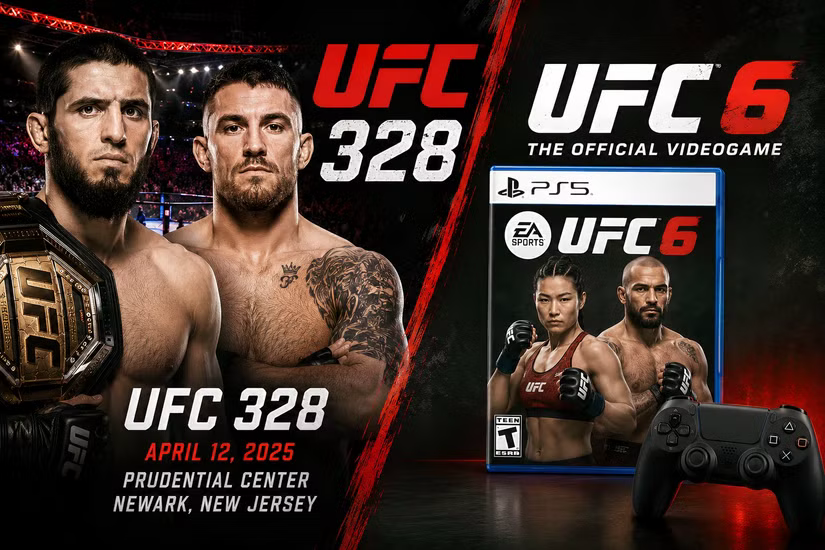
EA Sports UFC 6 launches June 19, 2026, and the reveal has already ignited one of the more genuinely interesting debates in sports gaming: where is the line between simulation and arcade, and what happens when a franchise built on authenticity crosses it? The center of the controversy is the Flow State mechanic. When a player successfully lands a series of strikes or maintains dominant positioning, a flow state window activates, granting temporary boosts to damage, speed, and accuracy designed to simulate the real-world phenomenon of a fighter smelling blood and moving in for the finish. The mechanical concept is defensible on its own terms — rewarding offensive momentum, distance control, and timing rather than repetitive cheese tactics is exactly the kind of depth that separates skilled players from button mashers. Supporters on Reddit argue it represents genuine fighter IQ, capturing the moment a fighter like Khamzat Chimaev locks in and becomes essentially unstoppable. The problem, for a significant portion of the hardcore community, is not the mechanic itself but the visual execution: when flow state activates, the fighter emits a subtle glow, and for a franchise that markets itself as a premium fighting simulator, that visual effect has been compared to Dragon Ball Z and Street Fighter on EA's own forums. "We don't need shadow effects and weird arcade fighting effects behind this mess," one critic wrote.
The timing of the UFC 6 reveal alongside UFC 328's Chimaev versus Strickland main event is not coincidental, and the matchup is a perfect real-world stress test for exactly the debate the game has sparked. Chimaev is the living embodiment of the flow state archetype: explosive, overwhelming, built around early health events and offensive momentum that compounds on itself. Watching him fight tonight is functionally a demonstration of what the mechanic is trying to simulate. Strickland is the opposite — a gritty, volume-based defensive fighter who thrives on disrupting rhythm, frustrating aggressive opponents with Philly shell positioning and reset jabs, and controlling pace rather than imposing it. In game terms, he represents the player who negates a flow state through pure defensive fundamentals rather than matching aggression. The broader cultural moment is real: with Alex Pereira and Max Holloway as the UFC 6 cover athletes and a major fight card running simultaneously with the game's peak hype cycle, the gap between live sport and digital representation has never been smaller. Whether the flow state mechanic ultimately validates the sim purists' concerns or proves the arcade critics wrong will be answered when the game releases June 19 — but UFC 328 is, intentionally or not, the most compelling advertisement EA could have asked for.