



















 Earn up to 50% APR
 Boost earnings with NFTs
 Play, HODL & earn more







The Risks and Rewards of the Corporate Ethereum Treasury Model — BitMine's $6.5 Billion Loss Shows Both Sides
-
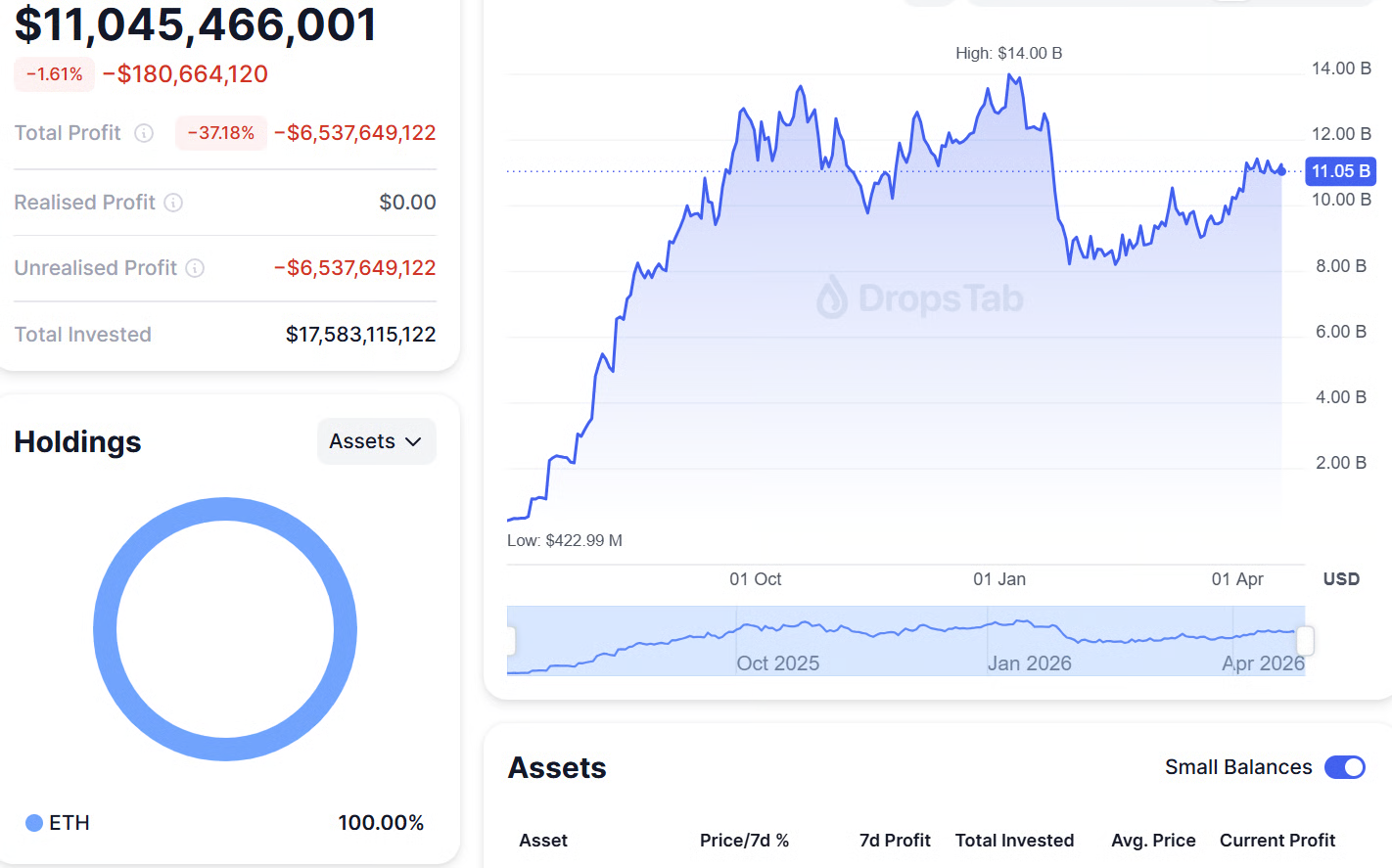
BitMine Immersion Technologies has become the most visible example of a corporate Ethereum treasury strategy, and its current financial position illustrates both the conviction and the risk that this model demands. With 5.08 million ETH on its books and a stated ambition to accumulate roughly 5% of Ethereum's total supply, BitMine is operating at a scale that makes it one of the most influential single holders of any major crypto asset outside of protocol treasuries and exchanges. The strategy is modeled on the playbook that Strategy pioneered with Bitcoin — use capital markets to raise funds, convert to a fixed-supply digital asset, and hold through volatility on the thesis that the asset will appreciate significantly over a multi-year horizon.The challenge, as BitMine's balance sheet currently shows, is that the model requires extraordinary tolerance for drawdown. More than $6.5 billion in unrealized losses on $17.6 billion in total ETH investments represents a paper loss of over 37% — a figure that would be catastrophic for most companies but that BitMine appears to be treating as a temporary condition rather than a structural problem. Staking 3.7 million of its ETH holdings generates ongoing yield that softens the impact of price declines, but validator rewards at current rates are not sufficient to meaningfully offset the scale of the unrealized losses during a bear phase. The broader lesson for anyone watching corporate crypto treasury strategies is that they are essentially a long-duration bet — one that requires both the financial resilience to survive deep drawdowns and the conviction to keep buying when the losses are largest, which is precisely the moment most investors stop.