



















 Earn up to 50% APR
 Boost earnings with NFTs
 Play, HODL & earn more







Gravity Bridge Hack Highlights Why Cross-Chain Security Remains a Major Challenge
-
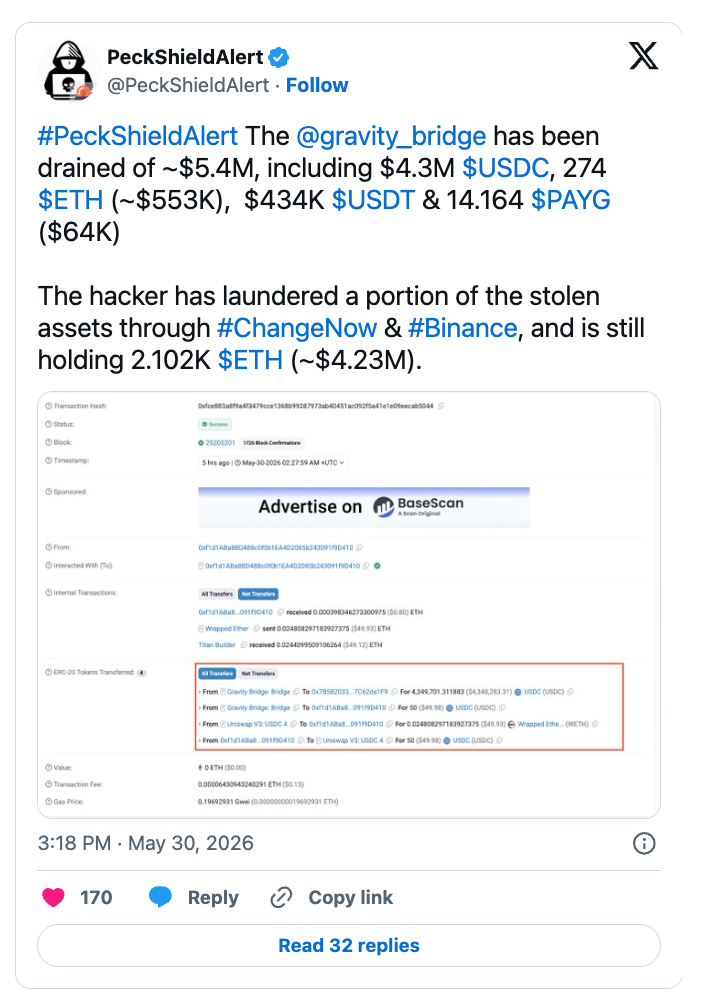
Gravity Bridge suffered a significant security breach after attackers drained approximately $5.4 million from its Ethereum-side contract. Early investigations suggest the incident was not caused by a flaw in the smart contract itself, but rather by the compromise of a privileged signing key that allowed transactions to appear legitimate. The stolen assets included USDC, ETH, USDT, and other tokens, with much of the value later converted into Ether.The incident serves as another reminder that bridges remain one of the most vulnerable components of the crypto ecosystem. While blockchain protocols may be highly secure, bridges often rely on validators, multisignature wallets, or privileged keys that can become attractive targets for attackers. As digital assets continue moving across multiple blockchain networks, improving bridge security remains one of the industry's most important priorities.
-
Every bridge hack eventually turns into a masterclass on why key management matters.
-
Crypto security is often less about code and more about who has access.
-
Bridges keep proving that moving assets is easy. Securing them is the hard part.
-
Attackers didn't break the protocol. They found the shortcut.
-
The blockchain did exactly what it was told. Unfortunately, so did the hacker.
-
Crypto users trust math. Hackers prefer targeting humans.
-
The biggest vulnerability isn't always in the codebase.
-
A bridge is only as secure as the people managing it.
-
Security audits are important. So is protecting the keys that bypass everything.
-
The industry keeps building stronger vaults while forgetting who holds the master key.
-
Bridge security is still one of crypto’s biggest weak points, especially when privileged keys are involved.