



















 Earn up to 50% APR
 Boost earnings with NFTs
 Play, HODL & earn more







Prediction Markets Are Under Regulatory Fire From Multiple Directions. Here Is What Is at Stake
-
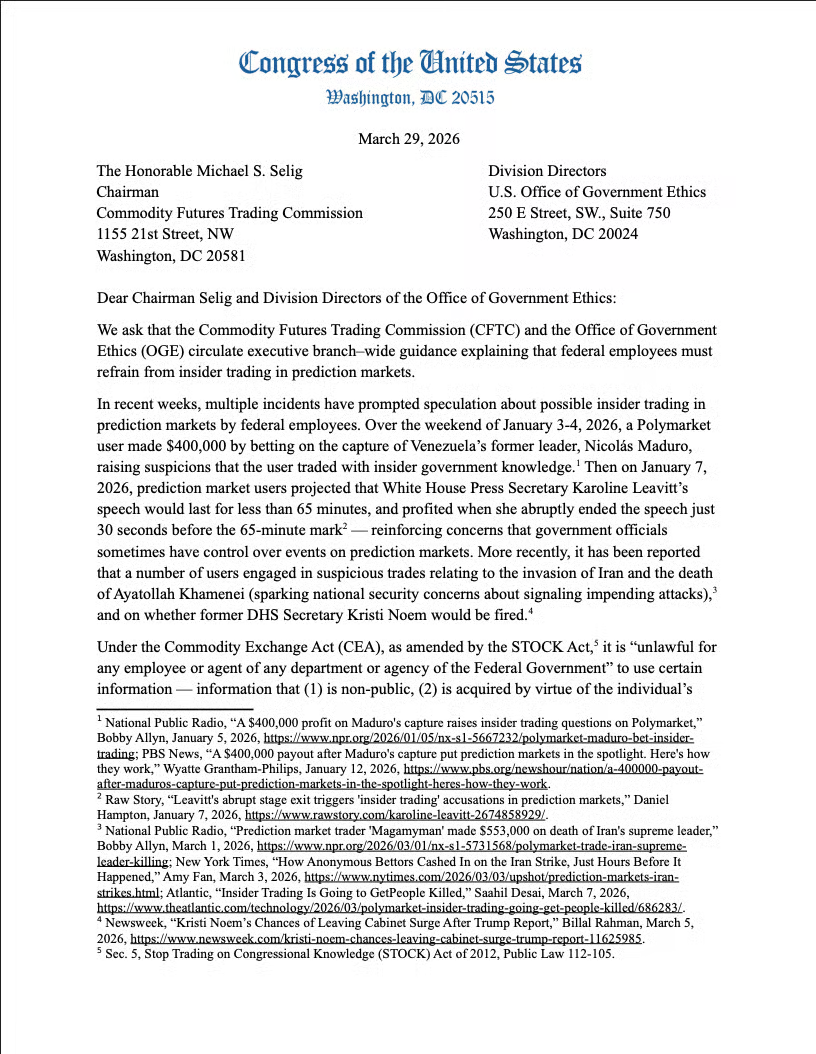
The prediction market sector's rapid growth has attracted regulatory scrutiny that is now coming from Congress, state attorneys general, and federal agencies simultaneously, creating a legal environment that could reshape how these platforms operate in the US market. In March, Senator Elizabeth Warren and more than 40 Congressional representatives wrote to the CFTC demanding a ban on government insiders using prediction market platforms to profit while serving in official capacities — a concern directed specifically at markets covering war, energy prices, and geopolitically sensitive events where officials might have material non-public information. Wisconsin Attorney General Josh Kaul filed lawsuits against Kalshi, Polymarket, and other prediction markets in April, adding state-level legal pressure on top of the federal regulatory scrutiny. The CFTC maintains that event contracts are a type of swap subject to its jurisdiction, making the agency the primary regulatory body whose posture will determine how much room these platforms have to operate and expand.
The regulatory pressure is arriving at a moment when prediction markets have genuine mainstream momentum that neither regulators nor platforms want to squander. The sector generated $29.8 billion in April trading volume, a 12.4% increase from March, demonstrating that demand is accelerating rather than plateauing. For Kalshi, which is fully licensed in the US and growing faster than any competitor, the regulatory environment is a competitive advantage as much as a constraint — tighter rules that smaller or offshore platforms cannot meet would consolidate market share toward licensed incumbents. For Polymarket, the regulatory landscape represents both the primary obstacle to its US reintegration and the reason that reintegration matters so much: without CFTC approval for its main platform to serve US users, it will continue operating at a structural disadvantage against Kalshi in the world's largest financial market regardless of how well its global product performs.