



















 Earn up to 50% APR
 Boost earnings with NFTs
 Play, HODL & earn more







Bybit CMO Says Fintech Is Missing $112 Billion in Latin American Remittances by Fixating on Mexico
-
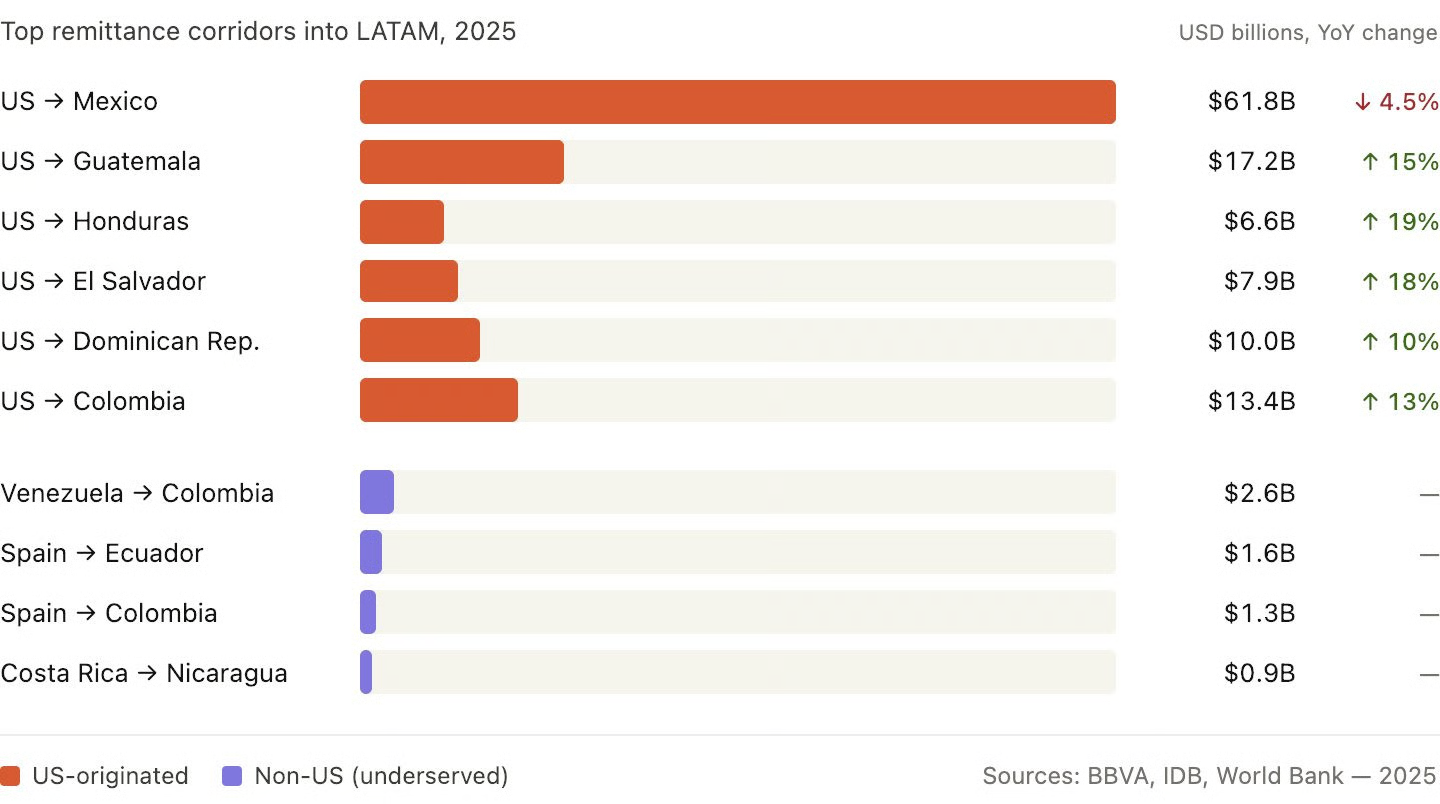
Bybit Chief Marketing Officer Claudia Wang has issued a pointed critique of how fintech and stablecoin companies are approaching the Latin American remittance market, arguing that the industry's narrow focus on the US-to-Mexico corridor is causing it to miss faster-growing and largely underserved opportunities worth approximately $112 billion. Wang, who spent six months studying the region, highlighted corridors including Venezuela-to-Colombia, Argentina-to-Bolivia, and Spain-to-Ecuador as examples of markets that are barely served by US money transmitter operators and almost untouched by crypto rails. Meanwhile, the US-Mexico corridor that most firms have optimized for fell 4.5% to $61.8 billion in 2025, while remittances to Honduras, El Salvador, and Guatemala rose 19%, 18%, and 15% respectively, driven by US immigration policy prompting migrants to send money home faster and in larger amounts as a hedge against deportation risk.
Wang's core message is that treating Latin America as a single market is a strategic mistake that will cost companies the opportunity. Brazil, Mexico, Argentina, and Colombia each require different regulatory licenses, different payment rails, different stablecoins, and different marketing approaches. The companies winning in the region are running country-specific infrastructure stacks rather than regional solutions. Western Union and MoneyGram, which have historically dominated Latin American remittances through banking rails, have both announced stablecoin infrastructure plans following the GENIUS Act, joining crypto-native competitors including Binance, Bitso, Strike, and Felix Pago. The market is becoming more competitive precisely as the growth opportunity is shifting to corridors that the leading players have not yet prioritized.