



















 Earn up to 50% APR
 Boost earnings with NFTs
 Play, HODL & earn more







What Should We Call Stablecoins Instead and Why the Answer Probably Does Not Matter
-
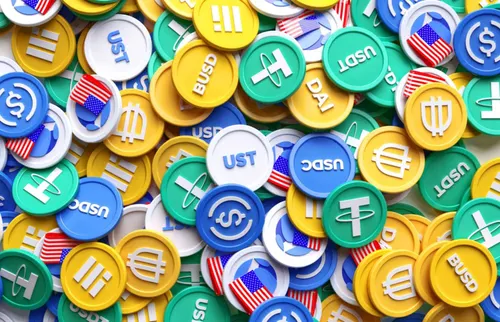
The most interesting part of the debate about renaming stablecoins is not the naming question itself but what it reveals about where the technology is heading. Robert Hackett of a16z crypto acknowledged that obvious alternatives like digital cash or programmable money are too clunky to gain traction, and that the first term to attach to a new technology tends to persist long after it stops being accurate. Email no longer resembles physical mail but nobody calls it anything else. Horsepower measures car engines despite horses having nothing to do with combustion. The skeuomorphic label survives because language changes slowly and the functional reality of widespread adoption makes precise naming less urgent than it might seem during the definitional stage.
Hackett's most compelling observation is the endpoint he predicts for the category: the technology disappears into the background entirely and becomes just how money works. The analogy he uses is electric lighting, a phrase nobody uses anymore because electricity became the default and the adjective became redundant. If stablecoins reach the same ubiquity, with dollar-denominated digital tokens settling cross-border payments, corporate treasury flows, payroll, AI agent transactions, and consumer purchases as a standard layer of financial infrastructure, the name becomes irrelevant because the thing it describes has become invisible. At that point the debate about whether to call it stablecoin, digital dollar, or programmable money will be as academic as debating what to call lights.
-
Email no longer resembling physical mail but keeping the name is either reassuring precedent for stablecoin branding or proof that bad names survive forever once enough people use them.