



















 Earn up to 50% APR
 Boost earnings with NFTs
 Play, HODL & earn more








The next major breakthrough in AI may not come from bigger models—it may come from smarter memory.
-
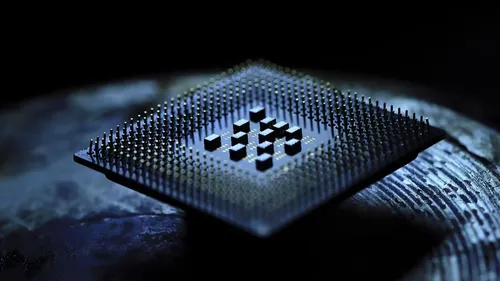
Today, every AI query triggers a constant back-and-forth between memory, CPUs, and GPUs. While GPUs handle the heavy computations, a surprising amount of work—including data preprocessing, caching, and context management—still depends on CPUs. This architecture creates bottlenecks, increases power consumption, and drives up infrastructure costs. South Korean startup XCENA believes the solution is to move computing closer to memory itself, reducing the need for expensive data transfers and making AI systems significantly more efficient.Investors are paying attention. XCENA has raised $135 million in a Series B round, bringing its valuation to $570 million and total funding to $185 million. Its flagship MX1 chip processes data directly within memory modules using CXL connectivity, targeting one of the fastest-growing challenges in AI: memory scaling. If the technology performs as promised, hyperscalers could potentially reduce server requirements dramatically while lowering operational costs. As AI infrastructure evolves, the battle may shift from who has the most powerful GPUs to who can move and manage data most efficiently.