

















 Earn up to 50% APR
 Boost earnings with NFTs
 Play, HODL & earn more




The OpenAI Board That Fired Sam Altman Explains Why It Did — And Why It Failed
-
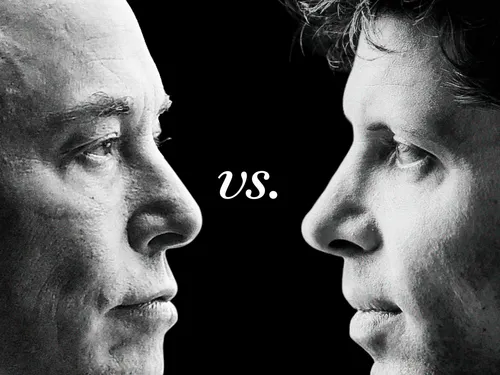
One of the most consequential governance failures in the history of the technology industry is finally getting a detailed public airing in a federal courtroom, and the testimony from those involved paints a troubling picture of how little control OpenAI's nonprofit board actually had over the for-profit operation it was supposed to oversee. Tasha McCauley, a former board member who was among those who voted to briefly fire CEO Sam Altman in 2023, testified about a pattern of information being withheld or misrepresented that made informed governance essentially impossible. Altman lied to one board member about another member's intentions regarding a third, failed to inform the board about the decision to launch ChatGPT publicly, and did not adequately disclose potential conflicts of interest. "Our primary way to oversee the for-profit underneath us was being called into question," McCauley told the court. "We did not have a high degree of confidence at all to trust that the information being conveyed to us allowed us to make decisions in an informed way." The board's attempt to act on those concerns by removing Altman collapsed almost immediately when OpenAI's employees sided with Altman and Microsoft moved to restore the status quo, forcing the dissenting board members to step down rather than Altman.
The deeper implications of McCauley's testimony extend well beyond the internal politics of one company. David Schizer, a former dean of Columbia Law School testifying as an expert witness for Musk's team, argued that the process failures around safety review are precisely the kind of governance breakdown that makes OpenAI's mission claims hollow in practice.McCauley went further, arguing that the failures of internal governance at OpenAI should be a catalyst for stronger government regulation of advanced AI development. "If it all comes down to one CEO making those decisions, and we have the public good at stake, that's very suboptimal," she said. That statement captures the core tension the trial is surfacing: OpenAI began as an organization specifically designed to ensure that the development of transformative AI served humanity rather than any single company or individual. The trial testimony is making a detailed public case that the governance structures meant to enforce that commitment were systematically undermined, and that the people responsible for maintaining them were ultimately powerless to do so.