
















 Earn up to 50% APR
 Boost earnings with NFTs
 Play, HODL & earn more





A Pardon That Never Came: How Rodriguez's Hope Faded Behind Bars
-
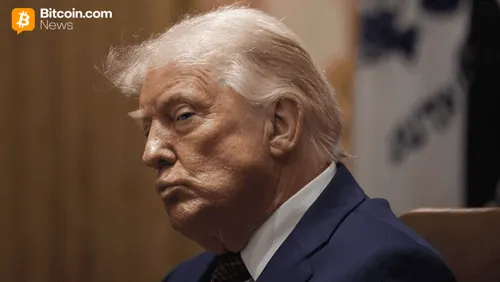
When Keonne Rodriguez, co-founder of the Bitcoin privacy wallet Samourai, surrendered to federal custody in December 2025, there was still a thread of hope within the Bitcoin community that a presidential pardon might be within reach. President Trump had publicly signaled in late 2025 that he would consider clemency for Rodriguez, and the topic gained renewed energy at the Bitcoin 2026 conference earlier this year. For a community that sees privacy tools as fundamental to financial sovereignty, the prospect of a pardon felt like a possible acknowledgment that the prosecution had overreached in criminalizing open-source software development. That hope, however, has not materialized into action.
Writing from FPC Morgantown in West Virginia, Rodriguez now describes his pardon prospects as "very low," and his message carries little of the optimism that once surrounded his case. Five months into a five-year sentence, facing over $2 million in combined legal debt and a $250,000 court fine, he has turned to the Bitcoin community itself for financial support — asking for donations to cover costs that lawyers and the Justice Department are actively pursuing. It is a striking reversal for a figure who was once celebrated as a champion of financial privacy, and it underscores how quickly the political winds that briefly seemed favorable have shifted. Whether the broader crypto community responds meaningfully to his appeal remains to be seen, but the situation is a sobering reminder of the very real personal consequences that can follow when regulatory and legal frameworks collide with the ethos of decentralized, permissionless technology.
-
Writing from federal prison asking for Bitcoin donations via X, the irony of the payment method is not lost on anyone
-
He did not say he was sorry