


















 Earn up to 50% APR
 Boost earnings with NFTs
 Play, HODL & earn more






UK's FCA Clears the Path for Tokenized Funds to Run on Public Blockchains Within Existing Rules
-
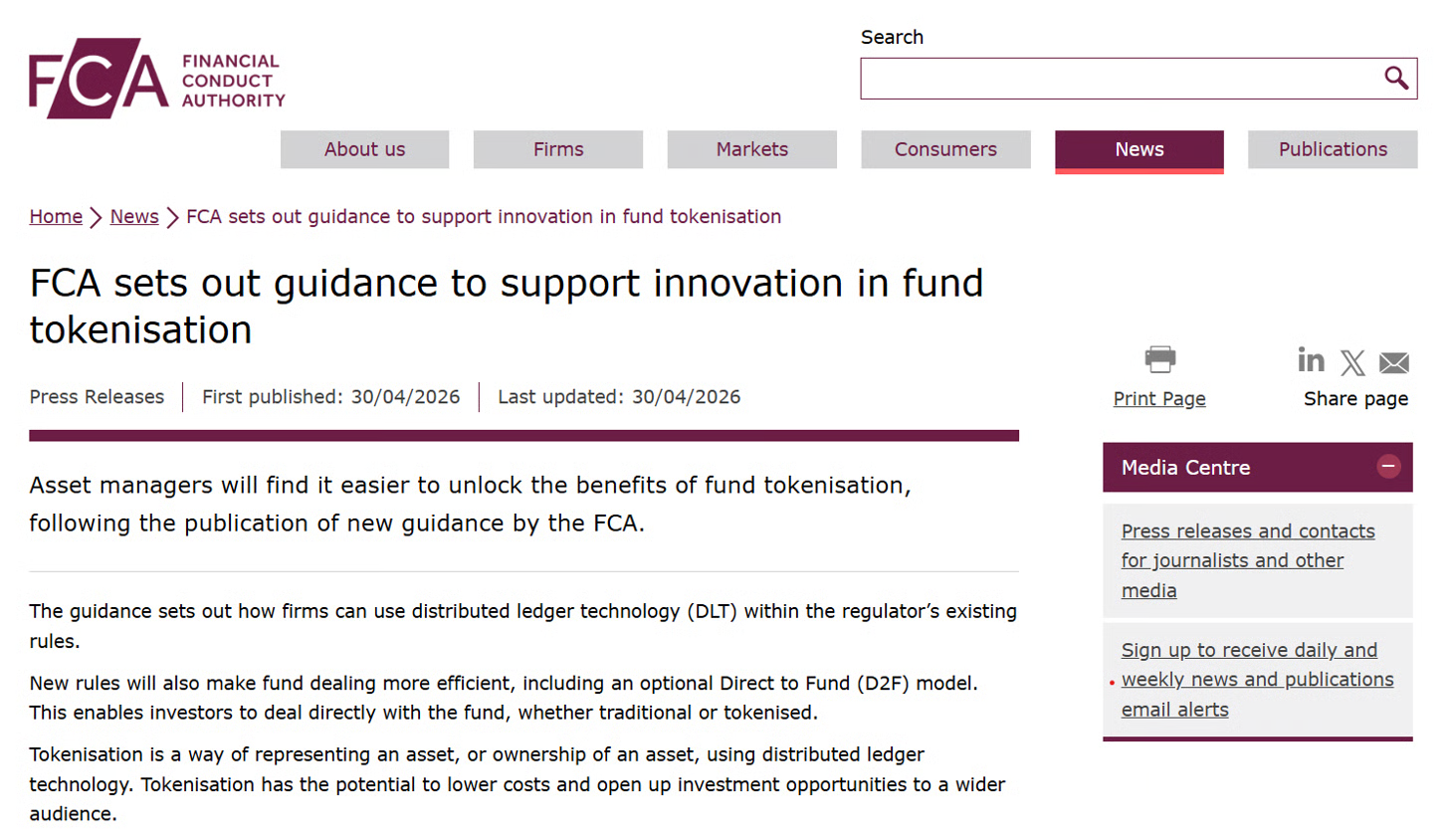
The UK's Financial Conduct Authority has published new rules and guidance that give asset managers a clearer path to integrate blockchain into regulated fund operations without needing to build parallel experimental structures outside the existing regulatory framework. The policy statement allows firms to run investor records on distributed ledger technology using an industry Blueprint model, confirming that on-chain transaction records can serve as the primary books for unit deals without requiring a full off-chain duplicate, provided appropriate resiliency plans are in place. Authorized funds can also maintain their registers on public DLT networks if controls meet FCA standards, and can issue units across multiple blockchains as long as investor rights and charges remain consistent across all of them.
The practical significance of the FCA's move is that it removes a major source of uncertainty that has prevented mainstream asset managers from committing to tokenized fund infrastructure. By confirming that blockchain-based records can be primary rather than supplementary, and by doing so within the existing fund regime rather than through a separate experimental sandbox, the FCA has given compliance teams the clarity they need to build and audit tokenized fund systems with confidence. The Blueprint model has already been used to authorize the first tokenized UK UCITS fund, providing a live proof of concept that the framework works in practice. The FCA framed the changes as part of a broader digital assets roadmap, signaling that this is the beginning of a regulatory modernization process rather than a one-off accommodation for a niche use case.
-
The FCA published rules making blockchain records legally primary for regulated funds on the same week a DeFi protocol shut down because its yield infrastructure got hacked and the two stories are both about the same technology.