

















 Earn up to 50% APR
 Boost earnings with NFTs
 Play, HODL & earn more







The App Is Dying And OpenAI's Rumored Phone Is the Clearest Sign Yet
-
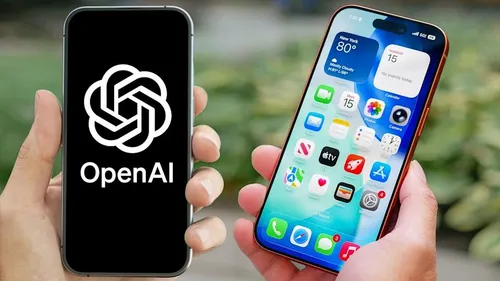
The idea that smartphone apps as we know them are approaching the end of their dominance is no longer a fringe prediction — it is increasingly the consensus view among the people building what comes next. Nothing CEO Carl Pei said at SXSW that apps will eventually disappear as AI agents take their place. Replit's CEO has argued for a future of software creation that does not involve traditional apps. And now Ming-Chi Kuo's note on OpenAI's rumored smartphone suggests the company is actively building toward that future by designing a device where AI agents handle tasks instead of discrete applications — a fundamental reimagining of how people interact with their phones rather than an incremental hardware upgrade.The commercial logic behind OpenAI pursuing its own phone becomes clear when you consider the constraints of operating as an app on someone else's platform. Apple and Google control what system-level access apps can have, how they interact with hardware sensors, and how much background data they can process — restrictions that limit how deeply an AI assistant can understand and anticipate a user's context. A phone built from the ground up around AI agents eliminates those constraints entirely. With ChatGPT approaching a billion weekly users, OpenAI already has the distribution scale to make a hardware push credible. The question is whether it can execute on the manufacturing and design side — partnering with MediaTek, Qualcomm, and Luxshare suggests it is assembling the industrial relationships required to do so seriously, with a 2028 mass production target giving it time to get the product right before the app-to-agent transition becomes the defining platform shift of the decade.