


















 Earn up to 50% APR
 Boost earnings with NFTs
 Play, HODL & earn more






How to Protect Yourself From Address Poisoning Scams
-
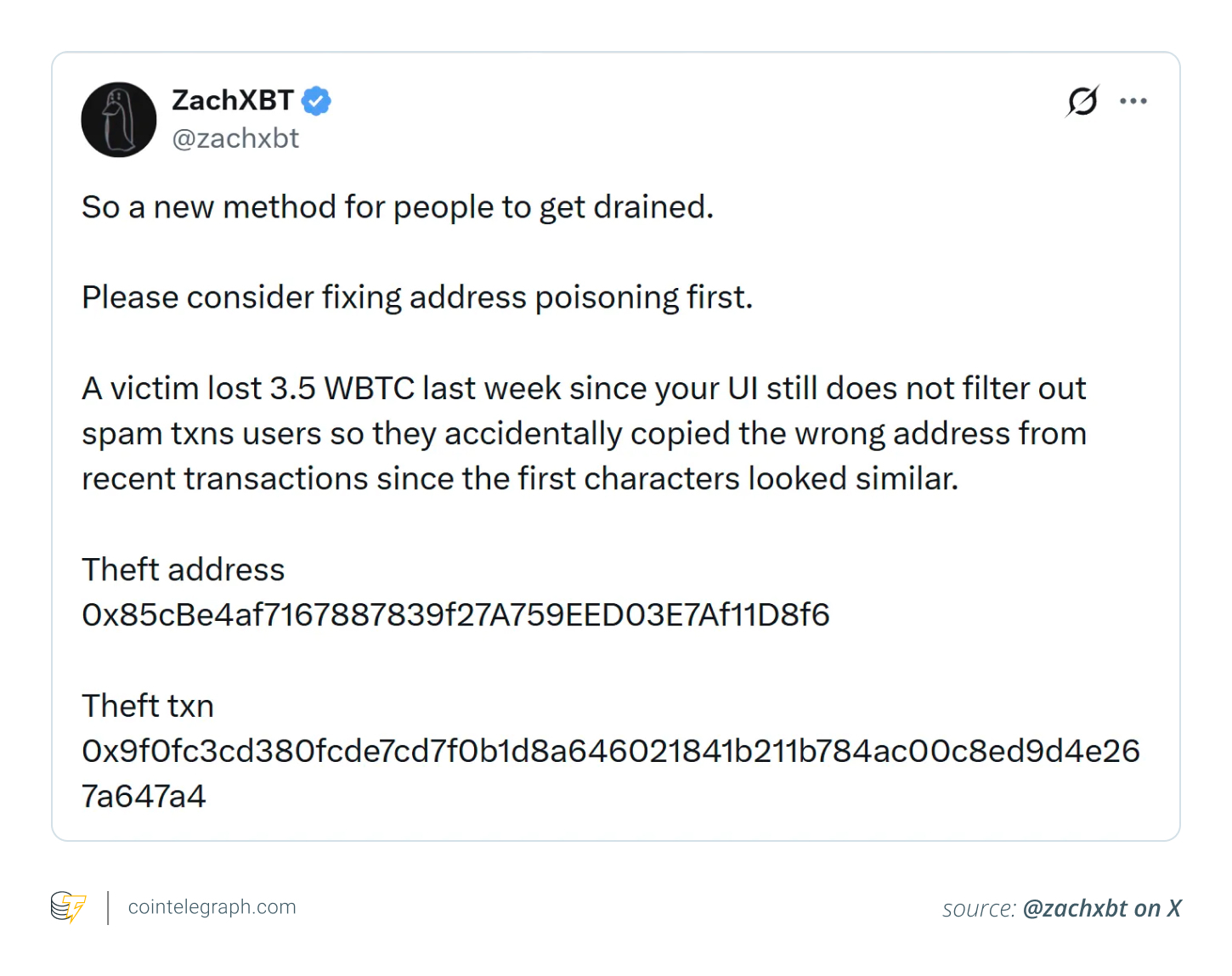
The good news is that preventing address poisoning doesn’t require advanced technical knowledge — just better habits. Users should avoid copying wallet addresses directly from recent transaction history. Instead, save verified addresses in a whitelist or address book and double-check every character before sending funds. Treat unexpected small transfers as potential red flags rather than harmless spam.
Wallet developers also play a critical role. Features like spam filtering, similarity detection for recipient addresses, and transaction simulation warnings can dramatically reduce risk. As crypto adoption grows, improving user interface design may be just as important as improving cryptography. In the case of address poisoning, awareness and smarter design — not stronger encryption — are the real defense.