


















 Earn up to 50% APR
 Boost earnings with NFTs
 Play, HODL & earn more







The Battle for Agentic AI Chip Supremacy Is Just Beginning and Nvidia Is Not the Only One Competing
-
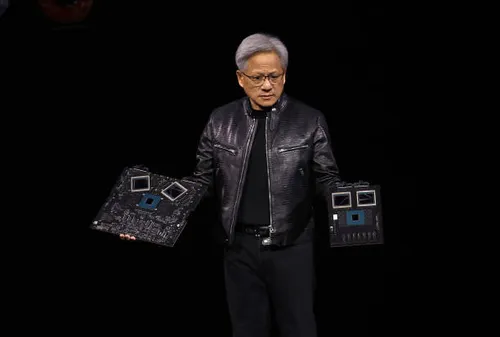
Nvidia's entry into the agentic CPU market with Vera arrives at a moment when the competition for AI chip dominance is accelerating across multiple fronts simultaneously. Amazon Web Services announced last month that Meta had signed a major contract for millions of Amazon's homegrown AI CPUs, and AWS CEO Andy Jassy has been explicit about his belief that Amazon can build AI chips at least as well as Nvidia and potentially better. That deal represented a direct challenge to the assumption that hyperscalers would continue relying on third-party chip suppliers for their AI infrastructure needs rather than developing competitive alternatives internally. With the compute demands of AI growing at a pace that makes chip supply one of the most strategically important variables in the industry, every major cloud provider has strong incentives to reduce dependency on any single external supplier.
Jensen Huang's answer to that competitive pressure is the argument that Vera is not simply another CPU competing in an established market but the opening move in a category that does not yet fully exist. The distinction he draws between CPUs built for core-based multi-instance cloud workloads and CPUs built specifically for token-processing in agentic workflows is the foundation of his claim to a $200 billion TAM that Nvidia has never previously addressed. If that distinction holds up in practice as agentic AI deployments scale, it would give Nvidia a window to establish the same kind of dominant early position in agentic CPU infrastructure that it built in GPU-based AI training before serious competition emerged. If the major cloud providers' homegrown alternatives prove equally capable for agentic workloads, the $200 billion market Huang is describing becomes a contested battleground rather than Nvidia territory, and the outcome of that contest will shape the AI chip landscape for years ahead.