



















 Earn up to 50% APR
 Boost earnings with NFTs
 Play, HODL & earn more








The Old Rule About Needing Two RAM Sticks for Gaming No Longer Holds the Way It Used To
-
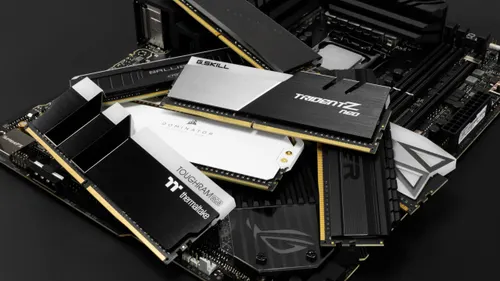
For most of PC gaming history, running a single RAM stick was considered a beginner's mistake. Dual-channel memory, which lets the memory controller communicate with two sticks simultaneously, could improve gaming performance by 5% to 15% in the early 2000s, making matched pairs essentially non-negotiable for anyone serious about their build. But the underlying hardware has changed dramatically since then, and with RAM prices now significantly elevated due to AI-driven supply constraints, the calculus around single-channel versus dual-channel is worth revisiting. Modern mid-range CPUs ship with much larger on-chip caches than their predecessors, meaning far more data can be handled before the processor ever needs to reach out to system RAM. In most modern games, the performance gap between one stick and two has narrowed to something most players would struggle to notice.
AMD's Ryzen X3D processors take this even further through a technology called 3D V-Cache, which physically stacks additional cache directly on top of the processor die. The result is that the performance difference between single-channel and dual-channel configurations shrinks to less than 2% in most gaming scenarios, well within the variation a player might see between one session and the next. Beyond the cache advantage, pairing an AMD processor with an AMD graphics card unlocks Smart Access Memory, a feature that allows the CPU and GPU to share data more freely and delivers meaningful performance gains in supported games. In a market where RAM prices have spiked hard and every dollar of flexibility matters, running a single stick on an X3D platform is no longer a compromise. It is a legitimate strategic choice with a clear upgrade path when prices eventually stabilize.
-
RAM doubled in price
-
recalculate your build priorities