



















 Earn up to 50% APR
 Boost earnings with NFTs
 Play, HODL & earn more








Coinbase sued over frozen funds linked to a $55 million DAI phishing theft after exchange requires court order to release assets
-
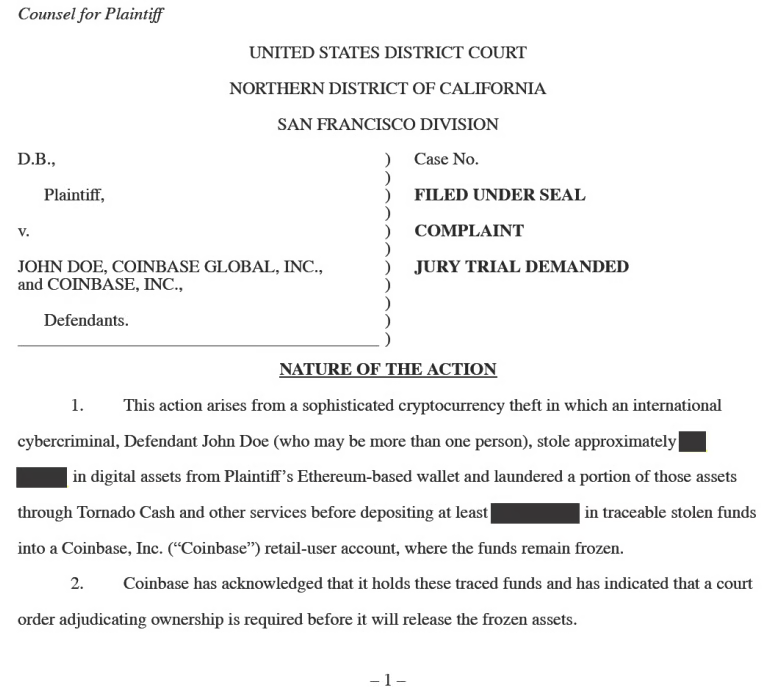
Coinbase sued for funds linked to the $55 million DeFi Saver hack. Source: CourtListenerCoinbase has been sued in California federal court by a Puerto Rico-based plaintiff seeking the return of cryptocurrency frozen on the exchange that is allegedly traceable to a $55 million DAI phishing theft from August 2024. The complaint, filed Monday in San Francisco federal court, alleges that after the attacker laundered stolen proceeds through Tornado Cash, a portion of the traceable funds was deposited into a Coinbase retail user account where they remain frozen. The plaintiff is asking the court to declare him the rightful owner of the frozen assets and order Coinbase to release them. According to the lawsuit, Coinbase has acknowledged holding the traced funds but indicated that a court order adjudicating ownership is required before it will release the assets to any claimant, a position that has left the victim in legal limbo nearly two years after the original theft.The underlying exploit was carried out using Inferno Drainer, a scam-as-a-service platform that enables digital asset theft through malicious links and fraudulent interfaces without requiring attackers to exploit code-level protocol vulnerabilities.
The victim was deceived into clicking a malicious link to a fake DeFi Saver login, authorizing the attacker to access his wallets. After contracting crypto analytics firms Zero Shadow and Five Stones Intelligence to trace the stolen funds, the victim identified evidence linking the laundering activity to Ukrainian citizen Okelsiy Oleksandrovych Gorelikhin. Zero Shadow notified Coinbase on November 30, 2024 that stolen funds had been deposited to a Coinbase address, and Coinbase confirmed on December 2 that the address belonged to a retail user and implemented friction measures preventing dissipation of the funds pending investigation. The lawsuit highlights a structural gap in crypto theft recovery where exchanges freeze suspected stolen funds appropriately but then require victims to obtain court orders before any release, a process that can take years and requires significant legal resources that many theft victims do not have.