


















 Earn up to 50% APR
 Boost earnings with NFTs
 Play, HODL & earn more







AML Enforcement Has Replaced Securities Classification as Crypto's Biggest Regulatory Risk
-
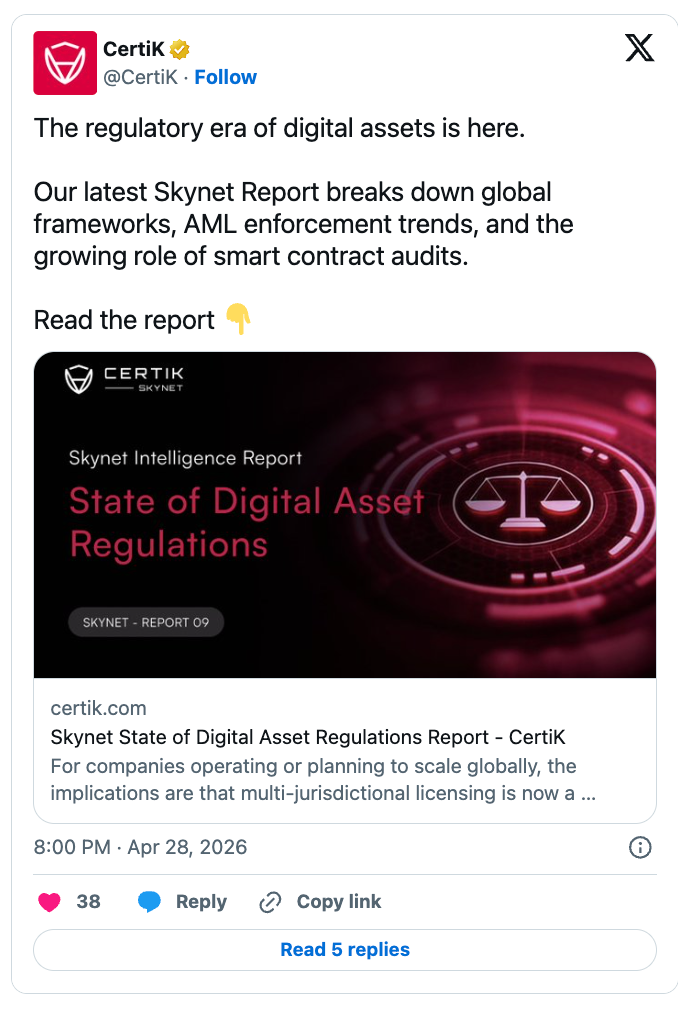
Anti-money laundering enforcement has overtaken securities classification as the primary regulatory threat facing digital asset firms, according to CertiK's Skynet State of Digital Asset Regulations Report published Tuesday. AML-related fines exceeded $900 million in the first half of 2025 alone, while US SEC crypto penalties fell 97% year-over-year as the Department of Justice and FinCEN absorbed the regulatory agenda previously dominated by securities classification battles. The shift represents a fundamental change in where crypto companies need to focus their compliance resources, with transaction monitoring, sanctions screening, and licensing infrastructure now carrying more weight than token classification arguments.
Two settlements define the scale of the enforcement shift. OKX paid $504 million to US authorities in February 2025 after pleading guilty to running an unlicensed money transmitting business, with prosecutors citing more than $5 billion in suspicious flows through the platform. KuCoin followed in January with a $297 million resolution covering similar Bank Secrecy Act failures, with its co-founders agreeing to step down and the exchange exiting the US market for at least two years. European regulators applied parallel pressure over the same period, with AML-related fines across the bloc surging 767%. The combined picture is of a global regulatory environment that has moved past debating what crypto is and started aggressively penalizing firms that fail to monitor and report what is flowing through their systems.