

















 Earn up to 50% APR
 Boost earnings with NFTs
 Play, HODL & earn more





Two Cross-Chain Exploits in One Month Signal a Growing Threat to Interoperability Infrastructure
-
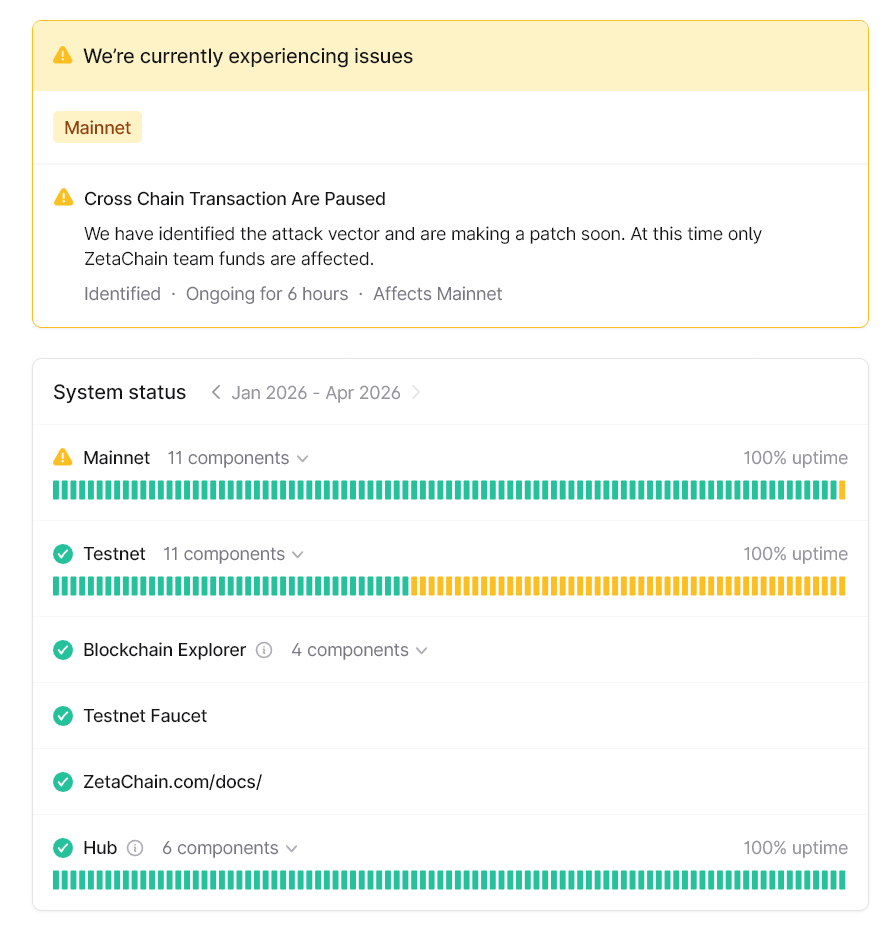
ZetaChain Network StatusZetaChain's Monday hack is the second cross-chain exploit to hit the crypto ecosystem in April 2026, following the KelpDAO attack that drained approximately $293 million and triggered a coordinated DeFi United recovery effort. While ZetaChain contained the damage to internal team wallets and reported that user funds were unaffected, the back-to-back incidents have intensified scrutiny around the security of cross-chain and interoperability infrastructure more broadly. Cross-chain bridges and protocols represent some of the most technically complex and security-sensitive components in the crypto stack, handling asset transfers across different blockchain environments where a single vulnerability can be exploited at the intersection of multiple systems simultaneously.
The pattern that has emerged across recent cross-chain exploits is consistent: attackers target the peripheral or interoperability layer rather than the core protocol, exploiting the complexity of how assets move between chains rather than vulnerabilities in any single blockchain's consensus mechanism. ZetaChain's response followed best practices for incident management, pausing transactions immediately, publishing public updates through its status page, and committing to a full post-mortem once the investigation concludes. However, the frequency of these incidents in a short window raises a structural question that the industry will need to address beyond individual incident responses: whether the current generation of cross-chain infrastructure has been built and audited to the security standard that the value it now carries demands. With hundreds of millions of dollars flowing through interoperability protocols daily, the answer to that question has consequences that extend well beyond any single hack.